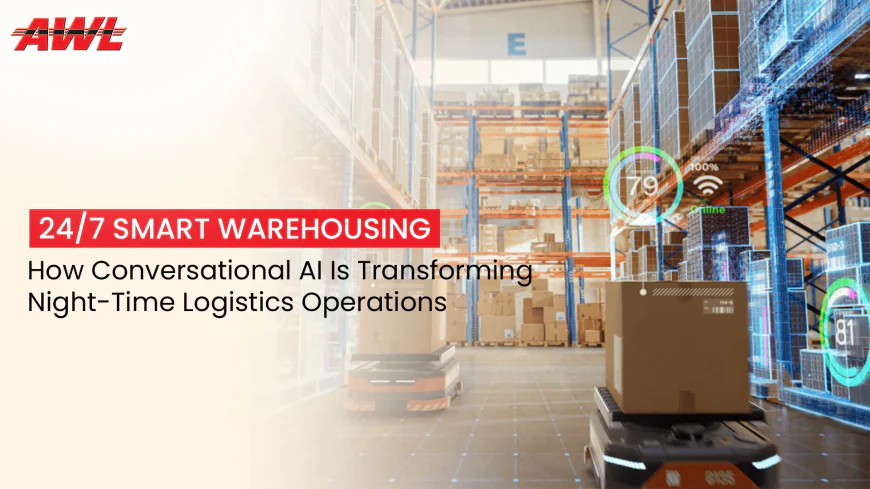
The logistics industry never sleeps. Warehouses across the world operate around the clock to meet rising customer expectations for same-day and next-day delivery. Night-time shifts have become essential for managing order volumes, dispatch schedules, and supply chain continuity. However, overnight warehouse operations often face unique challenges such as reduced staffing, slower communication, limited supervision, and higher chances of operational errors. This is where conversational AI is creating a major transformation.
Conversational AI is changing the way warehouses function after dark by improving communication, automating repetitive tasks, and helping teams work smarter and faster. Through voice assistants, chatbots, and AI-powered communication systems, warehouses can now maintain seamless productivity 24/7.
The Growing Need for Smart Night-Time Warehousing
E-commerce growth has significantly increased the demand for late-night logistics. Customers expect fast deliveries regardless of when they place orders. As a result, warehouses must continue receiving inventory, picking products, packing shipments, and dispatching trucks overnight.
Traditional best warehouse systems often struggle during these hours due to fewer managers on-site and limited support staff. Workers may face delays when they need quick answers regarding stock locations, order priorities, equipment issues, or shipment schedules. Conversational AI solves these problems by providing instant assistance anytime.
Real-Time Worker Support
One of the biggest advantages of conversational AI in warehousing is 24/7 worker support. Employees can use voice-enabled devices or mobile apps to ask simple questions such as:
- Where is item A stored?
- Which orders are priority shipments?
- How many cartons remain in Zone B?
- When is the next truck arriving?
Instead of searching manually or waiting for supervisors, workers receive immediate answers. This reduces downtime and keeps operations moving smoothly during night shifts.
Faster Order Picking and Packing
Order picking is one of the most time-consuming warehouse tasks. Mistakes during night shifts can increase due to fatigue or communication gaps. Conversational AI helps workers by guiding them step-by-step through picking routes and packing instructions.
For example, an employee wearing a headset can receive voice commands directing them to the correct aisle, rack, and shelf. Once the product is picked, the AI system confirms the next item instantly. This hands-free process increases speed, improves accuracy, and reduces human errors.
Better Inventory Visibility
Inventory management is critical during overnight operations, especially when stock is moving in and out continuously. Conversational AI connects with warehouse management systems to provide real-time stock updates.
Managers working remotely can ask the AI platform for inventory reports, shortage alerts, or incoming shipment status. Instead of waiting until morning, businesses can make faster decisions during the night itself. This helps prevent delays, stockouts, and order disruptions.
Improved Equipment Maintenance
Night shifts often rely heavily on forklifts, conveyor belts, scanners, and packing machines. If equipment fails overnight, operations can slow down immediately. Conversational AI can support predictive maintenance by alerting staff before machinery breaks down.
Workers can also report issues simply by speaking to the system. For example, saying “Forklift battery low in Zone C” can instantly notify maintenance teams. This faster reporting system minimizes downtime and keeps productivity high.
Enhanced Safety and Compliance
Safety becomes even more important during overnight warehouse shifts when visibility is lower and workers may feel tired. Conversational AI can deliver automatic reminders about safety protocols, forklift routes, emergency exits, and break schedules.
AI systems can also track whether workers completed required compliance checks before operating machinery. These smart reminders help reduce accidents and create a safer working environment.
Multilingual Communication Support
Many warehouses employ workers from diverse language backgrounds. Miscommunication during fast-paced night operations can lead to costly mistakes. Conversational AI platforms can translate instructions into multiple languages instantly.
This ensures every worker understands tasks clearly, regardless of their native language. Better communication leads to stronger teamwork, smoother workflows, and higher confidence among staff members.
Smarter Management Decisions
Warehouse supervisors cannot always be physically present during overnight shifts. Conversational AI fills this gap by providing live dashboards, alerts, and voice-generated reports.
Managers can check:
- Orders completed per hour
- Pending shipments
- Staff productivity levels
- Delayed dispatches
- Inventory shortages
With this visibility, leaders can make immediate decisions from anywhere and maintain full control of night-time logistics operations.
Cost Savings and Efficiency
Running a warehouse 24/7 can be expensive. Labor inefficiencies, picking errors, delays, and equipment downtime all increase operational costs. Conversational AI reduces these issues by automating communication and improving workflow accuracy.
Companies save money through:
- Lower error rates
- Faster processing times
- Reduced training needs
- Better resource planning
- Less equipment downtime
These benefits make conversational AI a valuable long-term investment.
The Future of Night Logistics
As AI technology continues to evolve, warehouses will become even smarter. Future systems may include advanced voice robots, autonomous forklifts, intelligent scheduling assistants, and AI-powered demand forecasting.
Night-time logistics operations will no longer be seen as a difficult shift to manage. Instead, they will become highly efficient, data-driven environments powered by conversational AI.
Conclusion
The rise of 24/7 commerce demands smarter warehousing solutions, especially during night operations. Conversational AI is transforming logistics by improving worker support, speeding up order fulfillment, enhancing safety, and enabling real-time decision-making.
Warehouses that adopt conversational AI gain a competitive advantage through faster operations, lower costs, and better customer satisfaction. In the modern supply chain, staying productive after dark is no longer optional—it is essential. Conversational AI is leading the way toward the future of round-the-clock smart warehousing.



 awlservices