Odoo ERP Software Development for End-to-End Process Integration
Odoo ERP Software Development enables businesses to integrate sales, finance, inventory, manufacturing, and operations into one unified system. By eliminating data silos and automating workflows, Odoo improves efficiency, decision making, and scalability. With custom development, organizations achieve seamless end-to-end process integration that supports growth, agility, and long-term digital transformation.
 BiztechCS
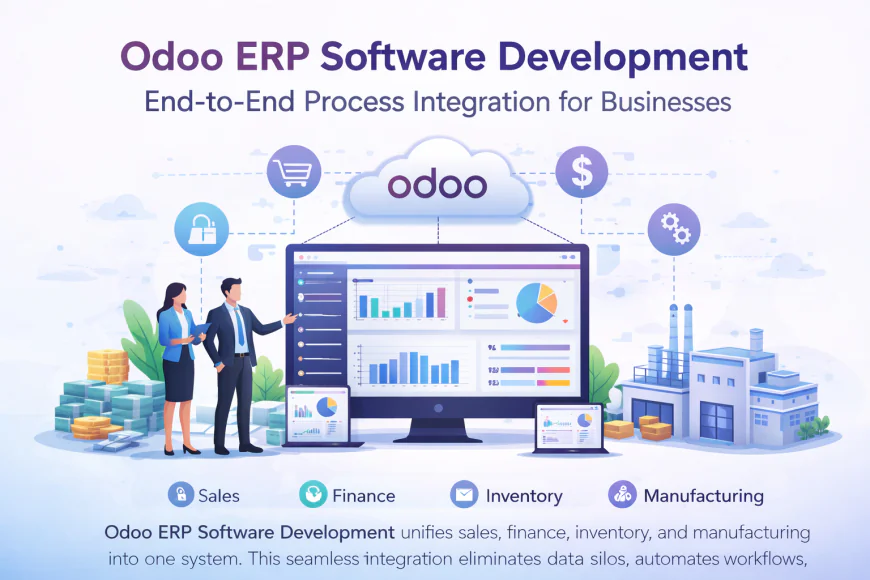
In an era where businesses operate across multiple systems, platforms, and locations, seamless coordination is no longer optional. Odoo ERP Software Development plays a critical role in helping organizations unify fragmented processes into a single intelligent ecosystem. Instead of juggling disconnected tools for finance, sales, inventory, manufacturing, and customer management, businesses can rely on a centralized ERP framework that synchronizes every operational function. This level of integrat
ion not only improves efficiency but also enables leadership teams to make faster, data backed decisions with confidence.
Modern enterprises demand agility, scalability, and transparency. Odoo delivers these advantages through a modular architecture that adapts to unique business workflows. When implemented strategically, Odoo becomes the digital backbone that connects departments, automates workflows, and eliminates operational blind spots.
The Growing Need for End-to-End Process Integration
As businesses scale, operational complexity increases. Teams often rely on multiple applications for different tasks, resulting in data silos, manual work, and inconsistent reporting. These inefficiencies slow growth and introduce unnecessary risks.
End-to-end process integration solves this challenge by connecting every stage of business operations, from lead generation to order fulfillment, invoicing, inventory updates, and post-sales support. With Odoo, data flows seamlessly across departments, ensuring that every stakeholder works with accurate, real time information.
This is where odoo custom development becomes essential. While Odoo offers robust standard modules, businesses often require tailored workflows, unique approval mechanisms, or specialized reporting structures. Custom development ensures the ERP system aligns perfectly with business objectives rather than forcing teams to adapt to rigid software limitations.
How Odoo Enables Seamless Process Connectivity
Odoo is designed with integration at its core. Each module communicates natively with others, creating a unified operational environment. Sales teams can trigger inventory movements, accounting entries, and delivery processes automatically without manual intervention.
For example, when a sales order is confirmed, Odoo instantly updates stock levels, generates invoices, schedules deliveries, and records financial entries. This synchronized workflow reduces delays, minimizes errors, and enhances customer satisfaction.
Beyond native modules, Odoo also supports API based integrations with third party platforms such as payment gateways, shipping providers, CRM tools, and business intelligence systems. This flexibility allows businesses to build a truly connected digital ecosystem.
Customization as a Strategic Advantage
Every business operates differently. Generic ERP implementations often fail because they overlook industry specific workflows and organizational nuances. Odoo custom development empowers companies to shape the ERP around their operational DNA.
Through customization, businesses can create advanced automation rules, specialized dashboards, custom approval hierarchies, and role based access controls. These enhancements transform Odoo from a standard ERP into a strategic operational asset.
Customization also supports future scalability. As businesses expand into new markets or launch new product lines, Odoo can evolve alongside them without requiring a complete system overhaul.
Integrating Core Business Functions
End-to-end integration is not limited to basic workflows. Odoo enables deep integration across core business functions, ensuring consistency and visibility across the organization.
Sales and CRM Integration
Sales teams gain full visibility into customer interactions, quotations, order history, and payment status. Automated follow ups and predictive insights improve conversion rates and customer retention.
Inventory and Supply Chain Integration
Real time stock visibility ensures optimal inventory levels. Automated replenishment rules and supplier integration reduce stockouts and overstock scenarios.
Accounting and Finance Integration
Financial data flows automatically from operational activities, ensuring accurate accounting, compliance readiness, and faster financial reporting.
Manufacturing and Operations Integration
Production planning, bill of materials, and work order management integrate seamlessly with inventory and procurement processes, reducing production delays.
Human Resource Integration
Employee data, payroll, attendance, and performance metrics align with operational needs, improving workforce planning and productivity.
The Role of Data Intelligence in Process Integration
Integrated systems generate massive volumes of operational data. Odoo transforms this data into actionable insights through advanced reporting and analytics capabilities.
Custom dashboards provide executives with real time visibility into key performance indicators, operational bottlenecks, and financial health. Predictive analytics and trend analysis empower businesses to anticipate challenges rather than react to them.
This intelligence driven approach strengthens decision making and supports long term strategic planning.
Industry Applications of Integrated Odoo Solutions
Odoo ERP Software Development supports a wide range of industries, each with unique integration requirements.
Manufacturing companies benefit from synchronized production planning and supply chain coordination. Retailers achieve omnichannel visibility across online and offline sales channels. Logistics providers gain real time shipment tracking and route optimization. Service based organizations streamline project management, billing, and resource allocation.
The adaptability of Odoo makes it suitable for both startups and large enterprises seeking operational coherence.
Enhancing Agility and Business Resilience
Integrated ERP systems enhance organizational agility. When market conditions change, businesses can respond quickly by adjusting workflows, updating pricing structures, or launching new services.
Odoo supports rapid configuration changes without disrupting core operations. This resilience is crucial in competitive markets where adaptability determines survival and success.
By eliminating manual dependencies and fragmented systems, businesses become more resilient against operational disruptions.
Security, Compliance, and Governance
Data integration raises concerns about security and compliance. Odoo addresses these challenges through robust access controls, audit logs, and role based permissions.
Custom development further strengthens governance by aligning system controls with internal policies and regulatory requirements. This ensures data integrity, compliance adherence, and risk mitigation.
Secure integration builds trust across teams and stakeholders, reinforcing confidence in enterprise systems.
Long-Term Value of Integrated ERP Development
Investing in Odoo ERP Software Development delivers long term value beyond immediate efficiency gains. Integrated systems reduce operational costs, improve accuracy, and enhance scalability.
Businesses gain a single source of truth that supports growth, innovation, and strategic decision making. Over time, this foundation enables organizations to adopt emerging technologies such as artificial intelligence, automation, and advanced analytics with ease.
An integrated ERP system is not just software; it is a strategic enabler of sustainable growth.
Choosing the Right Development Approach
Successful integration requires a structured development approach. This includes process mapping, requirement analysis, phased implementation, and continuous optimization.
Partnering with experienced Odoo developers ensures best practices, performance optimization, and long term maintainability. A strategic development roadmap aligns technical execution with business vision.
The right approach transforms ERP implementation into a competitive advantage rather than a technical burden.
Conclusion
Odoo ERP Software Development for end-to-end process integration empowers businesses to overcome fragmentation, streamline operations, and unlock data driven intelligence. By connecting every operational function into a unified platform, organizations gain transparency, agility, and control.
With thoughtful customization, intelligent automation, and strategic integration, Odoo becomes more than an ERP solution. It becomes the digital foundation that supports innovation, resilience, and long term success in an increasingly complex business landscape.