Gear Coupling: The Hidden Component That Keeps Machines Running
Gear coupling connects shafts, transmits power while accommodating slight misalignment, reducing stress, preventing damage, and ensuring operation in heavy machinery.
 harjotinternational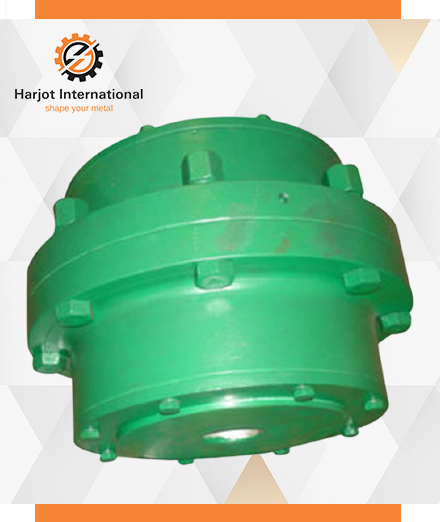
When a machine suddenly stops, most people think something major must have failed. Usually, the motor gets blamed first, or some big system part. But in these working environments, especially in industries, the problem is often much smaller than that. It can come from a small connecting part that doesn’t look important at all. That part is called a gear coupling. Most people don’t even notice it. This part is placed between two rotating shafts and just keeps things connected. But when it starts giving trouble, the whole machine feels it. That’s why, over time, people who work with machines start to value these small parts much more than they did at first.
What a gear coupling actually does
A gear coupling connects two shafts so power can move from one side to the other. That’s the basic job. But here’s the important thing: machines are never perfectly aligned. Even if installation is done carefully, there is always a small difference between shafts. Now, if you connect them in a completely rigid way, that small difference creates pressure. And over time, pressure turns into damage. This helps to avoid such a situation. It keeps the connection strong but also allows a bit of movement. That’s why it works well in heavy machines.
Why do people ignore it so easily?
It’s easy to ignore something you can’t really see working. Gear couplings don’t make noise or grab attention when everything is running fine, so most people don’t think about them. The focus usually stays on bigger, visible machine parts. But just because something looks small or simple doesn’t mean it isn’t important. Many people only notice it when a problem happens, and that’s when they realise how much it actually matters.
-
A small vibration appears.
-
A slight change in sound.
-
Maybe a bit of heat near the connection.
In the beginning, machines don’t really give sudden problems most of the time. They give warnings first. And if those warnings are ignored, the problem becomes bigger.
How it Works
-
A gear coupling is just a part used to connect two shafts so they can rotate together.
-
One shaft has a fitted piece, and the other shaft has another matching piece. Both of them have teeth.
-
These two parts are kept together using a sleeve so they don’t come apart while the machine is running.
-
When one shaft starts rotating, the teeth push against each other, and the movement gets passed to the second shaft.
-
So both shafts start turning together, like they are linked.
-
Now, in the machines, it’s not a completely tight or fixed connection.
-
There is always a small bit of movement inside it.
-
And that’s not a problem at all, it’s actually needed.
-
Because in such working conditions, shafts are never perfectly aligned.
-
Even if installation is done carefully, small shifts happen during running, load changes, and vibration.
-
This coupling just adjusts to those small changes instead of forcing everything rigid.
-
That’s what keeps the machine running without putting extra stress on the shafts.
Where you usually find gear couplings
You won’t see these couplings in small home machines or light equipment. They are used where work is heavy and continuous. Like:
-
Cement factories
-
Steel plants
-
Power generation units
-
Mining machines
-
Large industrial production setups
In these places, machines don’t get rest easily. They run for long hours, sometimes non-stop. So they need something strong between shafts that won’t fail quickly. That’s exactly where these couplings fit in.
What it actually does for machines
A gear coupling simply helps machines stay stable. It:
-
Keeps the power transfer smooth
-
Handles heavy load without slipping
-
Takes care of small misalignment
-
Reduces pressure on connected parts
-
Helps avoid sudden breakdowns
These are things you notice over time in actual operation, not just in theory.
Problems that slowly appear
Even though these couplings are strong, it is not something you can ignore completely. If it is not maintained properly, issues start showing up slowly. You might notice:
-
A different kind of noise than usual
-
Slight vibration that wasn’t there before
-
Heat is building up around the area
-
Lubrication drying or leaking
-
Wear on the gear teeth
These signs don’t come all at once. They appear slowly, which is why people often miss them. And by the time they become obvious, some damage is already done.
Choosing the right gear coupling
Choosing the right gear coupling is important because it helps machines run smoothly and last longer without problems.
-
How much load does the machine carry
-
How fast does it operate
-
The size of the shaft
-
Working conditions like dust, heat, or moisture
If these things match properly, the coupling will work fine. If they don’t, you will start seeing problems sooner than expected.
Maintenance Tips
This is probably the easiest part, but also the most ignored. You don’t need anything special for gear coupling maintenance. Just basic care like:
-
Keep proper lubrication
-
Check alignment sometimes
-
Listen for unusual sound or vibration
-
Don’t overload the machine
Most breakdowns happen not because the part is weak, but because these simple things are ignored again and again.
When replacement becomes necessary
There comes a point where repair is not enough anymore. You should think about replacing the gear coupling if:
-
Vibration doesn’t stop even after fixing
-
Noise becomes constant
-
Teeth are visibly worn out
-
Lubrication issues keep coming back
-
Machine performance starts dropping
At this stage, waiting longer usually causes more damage to other parts as well. So replacement is the safer option.
Conclusion
Gear couplings might seem like a small part, but they quietly keep machines running without trouble. They connect parts, handle small misalignment, and help everything move smoothly. When they work well, machines last longer and don’t stop suddenly. That means less stress and fewer problems on the shop floor. Choosing a trusted name like Harjot International can make things easier, because good quality parts do their job right, every day, without creating extra headaches for your team and your daily work.
FAQs
-
What is a gear coupling used for?
It connects two shafts and transfers power between them. -
Does it need lubrication?
Yes, lubrication is important to reduce wear and keep it smooth. -
Can it handle heavy machines?
Yes, it is designed for heavy industrial use. -
What causes problems in gear coupling?
Mostly poor maintenance, misalignment, or overload. -
How long does it last?
With proper care, it can last for many years.