How Software Solutions Are Transforming Equipment Management in Construction
construction
 jamesthomas
Managing construction equipment is no small feat. It involves a multitude of tasks, from ensuring machines are in the right location at the right time to scheduling maintenance and repairs. The sheer scale of these operations, combined with the need for precise coordination, makes efficient equipment management crucial for any construction business. This is where equipment management software comes into play. It offers a robust solution to these challenges, simplifying asset management, improving operational efficiency, and reducing overall costs.
Construction equipment management software is revolutionizing the way construction teams track, maintain, and manage their equipment fleets. With its ability to streamline maintenance schedules, track equipment utilization, and monitor costs, this software not only saves time but also ensures the smooth running of construction operations. As the construction industry continues to evolve, businesses that embrace this technology are better positioned to stay ahead of the competition.
Streamlining Equipment Tracking
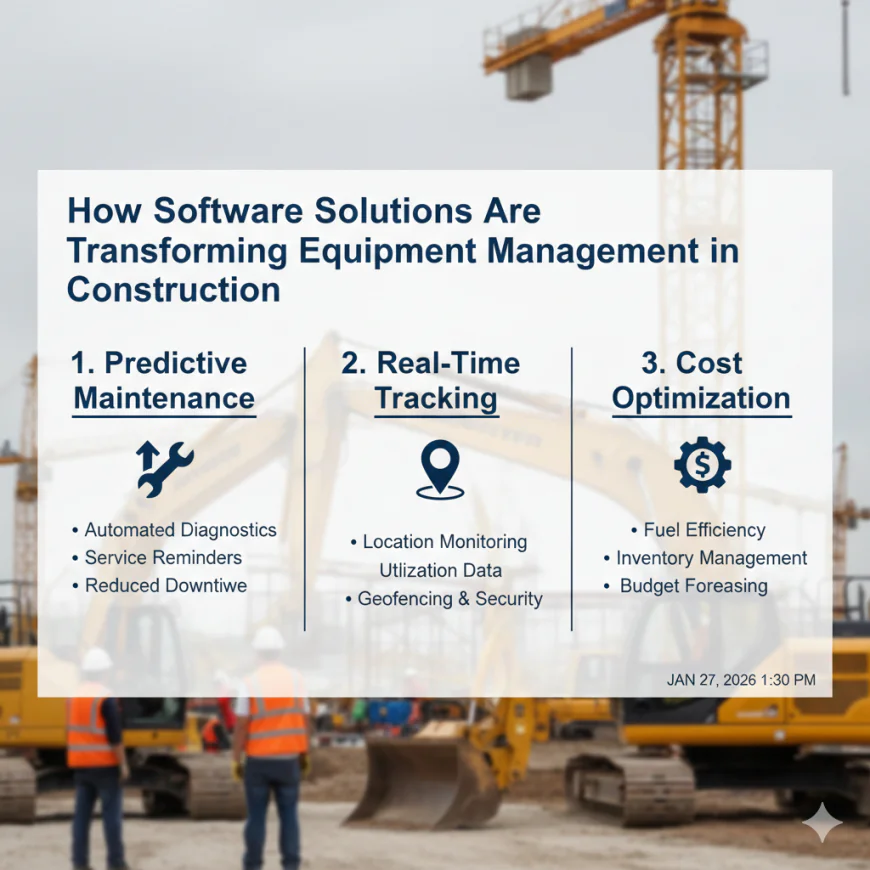
Effective tracking of construction equipment is essential for minimizing downtime and ensuring that machinery is always in the right place at the right time. Equipment management software provides real-time tracking of every asset, giving construction companies visibility into their fleet’s location, status, and usage patterns.
By using GPS tracking and telematics, companies can monitor equipment across multiple sites, providing insights into its usage and efficiency. This data can help optimize fleet deployment by ensuring that the right equipment is available when and where it’s needed. Additionally, real-time location tracking prevents equipment from being lost or left idle for long periods, which can significantly reduce overall operational costs.
Enhancing Preventive Maintenance
One of the most powerful features of equipment management software is its ability to schedule and track preventive maintenance. Regular maintenance is crucial for prolonging the lifespan of equipment and avoiding costly repairs or unexpected breakdowns that can halt project progress.
The software automates maintenance schedules based on the manufacturer’s recommendations or actual usage metrics, ensuring that machinery undergoes inspections and repairs before problems arise. This predictive approach allows companies to address issues proactively, reducing the likelihood of unexpected downtime and improving the overall reliability of their fleet.
Furthermore, the software can keep detailed records of all maintenance activities, which can be invaluable for audits, warranties, or resale purposes. By tracking every maintenance event, companies can demonstrate due diligence and preserve the value of their assets.
Reducing Equipment Downtime
Downtime is one of the biggest challenges faced by construction companies, and it can quickly erode profits. Equipment management software plays a crucial role in minimizing downtime by ensuring that maintenance is performed on time and by optimizing the scheduling of machinery for various tasks.
By monitoring usage patterns and identifying when equipment is due for maintenance, software solutions can alert companies about potential issues before they lead to breakdowns. Additionally, software tools can help companies plan work schedules more efficiently, ensuring that equipment is being utilized effectively and reducing idle time between tasks.
Predictive maintenance and better scheduling reduce the need for emergency repairs, keeping projects on track and helping businesses avoid the high costs associated with equipment failure.
Improving Equipment Utilization
Maximizing the utilization of construction equipment is crucial for improving ROI. Equipment management software helps track the number of hours each piece of equipment is used, as well as how often it is idle. With this data, companies can identify underutilized machinery and make adjustments to ensure that every asset is being put to good use.
In some cases, software can also help businesses determine whether it’s more cost-effective to repair or replace aging equipment. By analyzing utilization data, companies can make informed decisions about their fleet, ensuring that they are only maintaining equipment that is essential to operations. This level of insight allows for better capital allocation and can improve the financial efficiency of the business.
Increasing Safety and Compliance
Safety is always a top priority in construction, and managing equipment safety is essential for avoiding accidents and ensuring compliance with industry regulations. Construction equipment management software helps companies keep track of safety inspections, equipment certifications, and operator qualifications.
By automating safety checks and ensuring that equipment is compliant with relevant safety standards, companies can reduce the risk of accidents and costly fines. The software can also track operator training and certifications, ensuring that only qualified personnel are operating complex machinery. This helps mitigate risks associated with improper use and ensures that businesses are following regulatory requirements, which can prevent legal issues down the line.
Facilitating Cost Control and Financial Planning
Managing the financial aspects of equipment maintenance, repair, and replacement is essential for any construction business. Construction equipment management software enables businesses to track the total cost of ownership (TCO) of each piece of equipment, helping them understand the true cost of operation.
By monitoring fuel consumption, maintenance expenses, and repair costs, companies can identify areas where they can cut costs. This allows them to make more informed decisions about when to replace equipment or whether to invest in repairs. Furthermore, with better insights into the financial performance of each asset, construction businesses can create more accurate budgets and forecasts, ensuring that they remain financially viable in the long term.
Integrating with Other Construction Management Tools
One of the key advantages of equipment management software is its ability to integrate with other construction management systems. These systems often include project management software, workforce management tools, and inventory control software. By integrating these platforms, companies can gain a comprehensive view of their operations.
For example, equipment usage data can be linked with project timelines to determine whether the right machinery is available for upcoming tasks. Similarly, inventory management systems can alert businesses when they need to restock essential tools or parts for equipment repairs. These integrations help streamline operations, reduce administrative overhead, and improve coordination between departments.
Scalability for Growing Businesses
As construction companies expand, so does the complexity of managing their equipment. Construction equipment management software is scalable, allowing businesses to easily add new assets and manage a growing fleet without additional overhead. Whether you’re managing a handful of machines or hundreds, the software can adapt to your needs.
Scalable software solutions also offer flexibility for companies working across multiple job sites, allowing managers to monitor equipment performance, maintenance schedules, and utilization from a central platform. This scalability makes it easy for growing businesses to maintain control over their equipment without feeling overwhelmed.
Conclusion
Construction equipment management software is transforming the way businesses in the construction industry manage their assets. By offering real-time tracking, predictive maintenance, and data-driven insights, this software helps businesses improve operational efficiency, reduce costs, and enhance safety.
Whether it’s increasing equipment utilization, minimizing downtime, or streamlining compliance, the benefits of software solutions are clear. By integrating advanced technology into their operations, construction companies can stay ahead of the competition and ensure that their equipment is always ready to perform at its best. With the right software, businesses can manage their equipment more effectively, leading to greater profitability and success in the ever-evolving construction landscape.