Best Professional Embroidery Digitizing for Caps, Jackets, and Uniforms
Learn why best professional embroidery digitizing is essential for caps, jackets, and uniforms, ensuring stitch accuracy, durability, and consistent production quality.
 digitizing
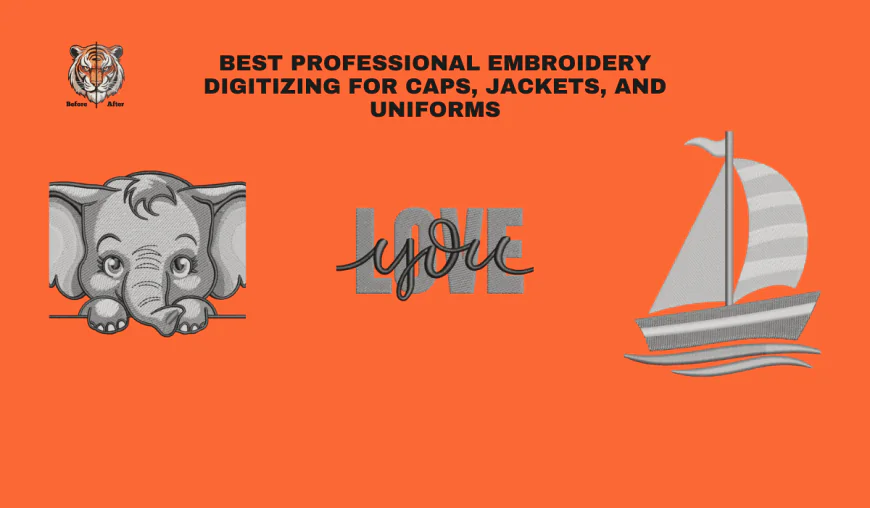
Embroidery on caps, jackets, and uniforms requires a higher level of technical precision compared to standard garments. These items involve structured fabrics, varying thicknesses, and unique stitching challenges that can easily affect final results. This is where best professional embroidery digitizing becomes essential for achieving clean, durable, and consistent embroidery across all production runs. When designs are digitized correctly, they not only stitch accurately but also maintain their shape and clarity even after long-term use.
Professional digitizing ensures that embroidery files are engineered specifically for demanding garments. Unlike basic digitizing methods, this approach focuses on fabric behavior, stitch stability, and machine performance to prevent distortion, puckering, or thread breakage.
Why Caps, Jackets, and Uniforms Need Specialized Digitizing
Caps, jackets, and uniforms are not flat or uniform in structure. Caps have curved panels and stiff buckram, jackets are often thick or layered, and uniforms must withstand frequent washing and heavy wear. These factors make embroidery more complex.
Standard digitizing often fails to account for these challenges. Poor stitch planning can result in misaligned designs, uneven fills, or thread tension problems. Best professional embroidery digitizing adapts stitch strategies to each garment type, ensuring reliable performance during production.
Professional Digitizing for Cap Embroidery
Cap embroidery is one of the most technically demanding areas of embroidery. The curved surface, limited embroidery area, and structured material require precise stitch planning.
Professional digitizers use techniques such as center-out stitching and adjusted density to control fabric pull on caps. Stitch direction is carefully planned to maintain design balance and prevent distortion. Underlay stitches are customized to stabilize the fabric without adding excessive bulk.
These methods ensure logos and text remain clear and readable on both structured and unstructured caps.
Jacket Embroidery and Fabric Thickness Control
Jackets often feature thick materials such as fleece, denim, leather, or insulated layers. These fabrics react differently to stitches and require careful density management.
Best professional embroidery digitizing reduces excessive stitch density to prevent stiffness while maintaining proper coverage. Digitizers also adjust stitch length and underlay types to ensure the design sits smoothly on thicker surfaces.
This balance allows embroidered designs to remain flexible, durable, and visually clean on jackets without compromising comfort or appearance.
Uniform Digitizing for Durability and Consistency
Uniforms are designed for repeated use and frequent washing. Embroidery on uniforms must remain intact, readable, and professional over time.
Professional digitizing focuses on long-term durability. Stitch paths are optimized to reduce thread stress, while underlay structures reinforce the design without weakening the fabric. Lettering and logos are digitized with consistency in mind, ensuring identical results across large uniform batches.
This reliability is especially important for corporate, healthcare, and industrial uniforms where branding consistency matters.
Stitch Direction and Design Stability
Stitch direction plays a major role in how embroidery looks and holds up over time. Incorrect stitch angles can cause uneven texture, light reflection issues, or fabric distortion.
Professional digitizers manually plan stitch direction to support fabric structure and design flow. For caps, stitches follow panel curves. For jackets and uniforms, stitch angles are aligned to reduce tension and maintain shape.
This detailed planning improves design stability and ensures professional visual results.
Machine Compatibility and Production Efficiency
Caps, jackets, and uniforms often require different embroidery machines or hooping methods. Files that are not properly optimized can slow production and increase machine errors.
Best professional embroidery digitizing creates files that run smoothly across commercial embroidery machines. Trim counts are reduced, stitch sequences are efficient, and machine stress is minimized. This leads to faster production times and fewer interruptions.
Efficient files also extend machine life and reduce maintenance costs.
Handling Logos and Text on Structured Garments
Logos and text are common on caps, jackets, and uniforms, but they require careful digitizing to maintain clarity. Small lettering or fine details can easily lose definition if digitized incorrectly.
Professional digitizers adjust stitch density, spacing, and sequencing to keep text readable and logos balanced. They understand how embroidery threads interact with structured garments, allowing even complex designs to stitch cleanly.
This attention to detail protects brand identity and ensures professional presentation.
Quality Control and Revision Support
Another advantage of best professional embroidery digitizing is quality control. Files are reviewed and tested before final delivery to ensure proper performance on specific garments.
Professional services also offer revision support when adjustments are needed. Whether a design needs resizing, fabric-specific tuning, or machine optimization, professional digitizers provide reliable solutions.
This ongoing support is critical for businesses handling repeat orders or multiple garment types.
Long-Term Value for Embroidery Businesses
Although professional digitizing may cost more initially, it provides significant long-term value. Reduced errors, consistent quality, and efficient production help businesses save time and money over time.
For companies specializing in caps, jackets, and uniforms, professional digitizing supports scalability and client satisfaction. Reliable embroidery results build trust and strengthen business reputation.
Conclusion
Best professional embroidery digitizing is essential for caps, jackets, and uniforms due to their unique construction and performance demands. These garments require precise stitch planning, fabric-specific adjustments, and machine-optimized files to achieve consistent results.
By investing in professional digitizing, embroidery businesses can improve stitch quality, reduce production issues, and maintain durability across all garment types. This level of expertise ensures embroidery meets both visual and functional expectations in demanding commercial environments.
FAQs
Why is professional digitizing important for cap embroidery?
Caps have curved surfaces and structured materials that require specialized stitch planning to prevent distortion and maintain design clarity.
Can the same digitizing file be used for jackets and uniforms?
Not always. Professional digitizing adjusts files based on fabric thickness and garment use to ensure proper performance.
How does professional digitizing improve durability?
It optimizes stitch density, direction, and underlay to reduce thread stress and fabric damage during repeated use and washing.
Is professional digitizing suitable for bulk uniform orders?
Yes, it ensures consistent quality across large batches and reduces production errors.
What types of businesses benefit most from professional digitizing?
Commercial embroidery shops, apparel brands, corporate uniform suppliers, and promotional product businesses benefit the most.