Construction Spanish Course: The Ultimate Guide for Building Strong Communication Skills
Discover how a construction Spanish course improves communication, safety, and efficiency on job sites. Learn key vocabulary and boost your career today.
 meh.riztech
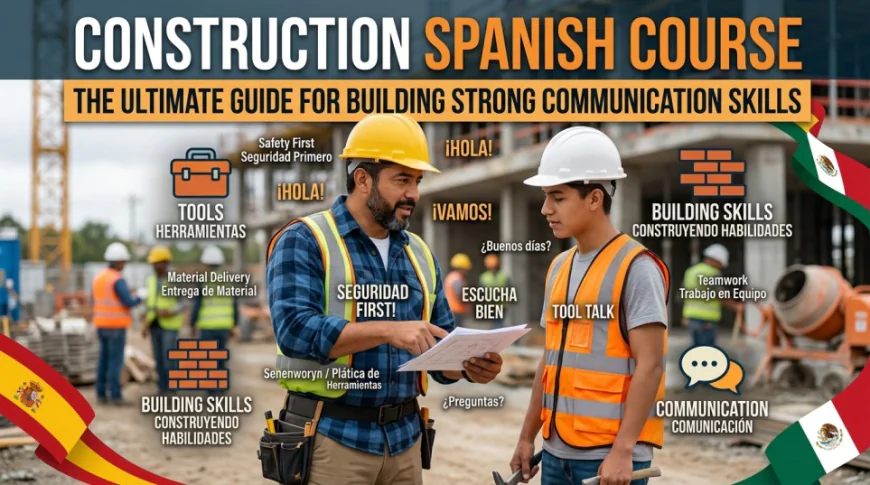
The construction industry depends on clear communication. Workers, supervisors, and project managers must understand each other to avoid costly mistakes. That is why enrolling in a construction spanish course can transform how you manage projects and interact with your team from day one.
Why Spanish Matters in the Construction Industry
Spanish is one of the most widely spoken languages in construction workplaces, especially across the United States. Many skilled laborers, subcontractors, and technicians are native Spanish speakers. Without proper communication, even simple instructions can lead to confusion, delays, or safety risks.
Learning construction-specific Spanish bridges this gap. It helps you give clear instructions, understand job requirements, and build stronger relationships with your team. As a result, productivity improves and workplace safety increases significantly.
What Is a Construction Spanish Course?
A construction Spanish course focuses on teaching practical language skills tailored to job site environments. Unlike general language classes, these courses emphasize industry-specific vocabulary, real-life scenarios, and communication techniques.
You do not need to become fluent. Instead, the goal is to understand and use essential phrases that help you communicate effectively in daily operations.
Key Topics Covered in a Construction Spanish Course
A well-structured course usually includes several important areas that directly apply to construction work.
1. Basic Spanish for Daily Communication
You will start with fundamental vocabulary and phrases. These include greetings, introductions, and simple instructions. This foundation makes it easier to build more advanced skills later.
2. Construction Tools and Equipment Vocabulary
Knowing the names of tools and machinery in Spanish is essential. You will learn how to identify and discuss items such as:
Hammer (martillo)
Drill (taladro)
Ladder (escalera)
Concrete mixer (mezcladora de concreto)
This knowledge helps prevent misunderstandings during tasks.
3. Safety Instructions and Protocols
Safety is critical on any job site. A construction Spanish course teaches you how to communicate warnings, rules, and emergency instructions clearly.
Examples include:
Wear your helmet
Be careful
Stop immediately
Understanding these phrases can prevent accidents and save lives.
4. Job Site Conversations
You will learn how to handle common workplace conversations. These include assigning tasks, asking questions, and providing feedback.
For example:
Where is the material?
Finish this section today
Check the measurements
These phrases help you manage workflow efficiently.
5. Numbers and Measurements
Construction relies heavily on numbers, dimensions, and calculations. A course will teach you how to communicate measurements, quantities, and specifications accurately in Spanish.
Benefits of Taking a Construction Spanish Course
Learning construction Spanish offers several advantages that go beyond basic communication.
Improved Workplace Efficiency
When workers understand instructions clearly, tasks are completed faster and with fewer errors. This leads to better project timelines and reduced costs.
Enhanced Safety
Clear communication minimizes risks. Workers who understand safety instructions are less likely to make dangerous mistakes.
Better Team Relationships
Speaking even basic Spanish shows respect for your team. It builds trust and improves collaboration across different roles.
Career Growth Opportunities
Professionals who can communicate in Spanish often stand out in the construction industry. This skill can open doors to leadership roles and higher-paying positions.
Who Should Take a Construction Spanish Course?
This type of course is useful for a wide range of professionals in the construction field.
Project Managers
Managers benefit by communicating directly with workers, reducing reliance on translators.
Site Supervisors
Supervisors can give clearer instructions and monitor work more effectively.
Contractors and Business Owners
Understanding Spanish helps build stronger relationships with clients and employees.
Skilled Workers
Even workers can benefit by improving teamwork and understanding job requirements more clearly.
How to Choose the Right Course
Not all courses are created equal. Therefore, it is important to choose one that fits your needs.
Focus on Industry-Specific Content
Make sure the course is designed specifically for construction. General Spanish courses may not cover relevant vocabulary.
Look for Practical Lessons
Choose a course that includes real-life scenarios and role-playing exercises. These help you apply what you learn immediately.
Flexible Learning Options
Online courses allow you to learn at your own pace. This is ideal for busy professionals.
Qualified Instructors
Courses led by experienced instructors ensure accurate pronunciation and effective teaching methods.
Tips to Learn Construction Spanish Faster
Learning a new language can feel challenging, but the right approach makes it easier.
Practice Daily
Consistency is key. Even 15–20 minutes of practice each day can make a big difference.
Use Flashcards
Flashcards help you memorize vocabulary quickly. Focus on tools, materials, and common phrases.
Listen and Repeat
Listening to Spanish audio improves pronunciation and comprehension. Repeat phrases aloud to build confidence.
Practice on the Job
Try using simple Spanish phrases at work. Real-life practice reinforces your learning.
Stay Patient and Consistent
Progress takes time. Focus on gradual improvement rather than perfection.
Common Challenges and How to Overcome Them
Learning construction Spanish comes with a few challenges, but they are manageable.
Fear of Making Mistakes
Many learners hesitate to speak because they fear errors. However, mistakes are part of the learning process. The more you practice, the more confident you become.
Limited Time
Busy schedules can make learning difficult. Short, focused sessions are more effective than long, infrequent ones.
Pronunciation Difficulties
Spanish pronunciation may feel unfamiliar at first. Listening and repeating regularly helps improve accuracy.
Real-World Impact of Learning Construction Spanish
The impact of learning construction Spanish goes beyond the classroom. It directly affects job performance and workplace dynamics.
For example, a supervisor who understands Spanish can quickly resolve issues without waiting for translation. Similarly, workers who receive clear instructions are more confident and productive.
Over time, this improved communication leads to smoother operations, fewer delays, and better project outcomes.
Future of Language Skills in Construction
The construction industry continues to evolve, and communication remains a key factor in success. As workplaces become more diverse, bilingual skills are becoming increasingly valuable.
Employers now actively seek professionals who can communicate across language barriers. Investing in a construction Spanish course today prepares you for future opportunities and industry demands.
Final Thoughts
A construction Spanish course is more than just a language program. It is a practical tool that enhances communication, safety, and efficiency on job sites.
Whether you are a manager, supervisor, or worker, learning construction Spanish gives you a competitive edge. It helps you connect with your team, reduce errors, and improve overall performance.
Start small, stay consistent, and apply what you learn in real situations. Over time, you will see significant improvements in both your language skills and your professional growth.