
Top Benefits of Using Commercial Floor Scrubbers Instead of Traditional Mops
This is where floor scrubbers have transformed the way businesses handle floor maintenance. These machines are designed to scrub, wash, and dry floors in a single pass, making them far more efficient than manual mopping. Instead of spreading dirty water across the surface, floor scrubbers actively remove dirt, grime, and contaminants while collecting the waste in a separate tank.
 CommercialCleaning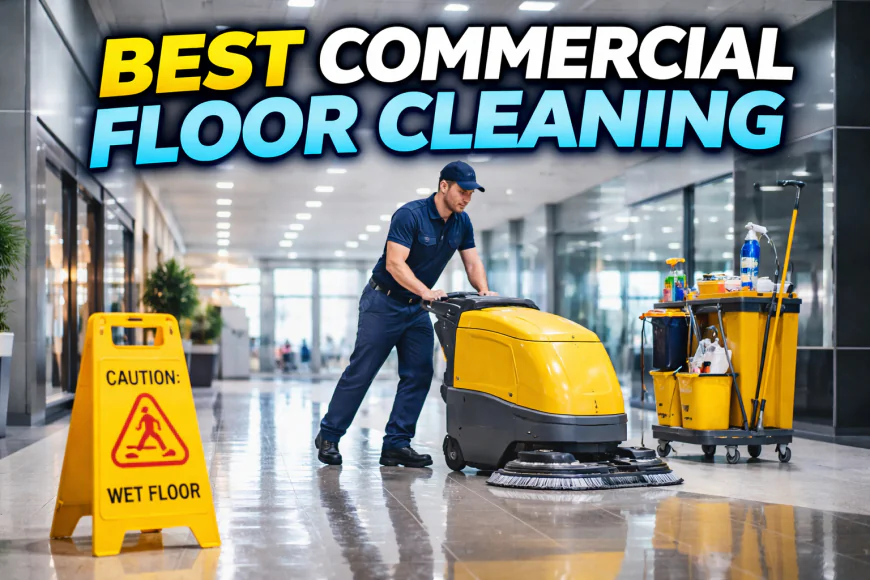
Keeping floors clean is essential for maintaining a professional, hygienic, and safe environment in any commercial or industrial facility. For many years, the traditional mop and bucket method was the standard approach to floor cleaning. While it may still be useful for small areas or quick cleanups, this method often falls short when dealing with large spaces, heavy foot traffic, or strict hygiene requirements. Modern facilities demand cleaning solutions that are faster, more effective, and capable of delivering consistent results every time.
This is where floor scrubbers have transformed the way businesses handle floor maintenance. These machines are designed to scrub, wash, and dry floors in a single pass, making them far more efficient than manual mopping. Instead of spreading dirty water across the surface, floor scrubbers actively remove dirt, grime, and contaminants while collecting the waste in a separate tank.
The Evolution of Commercial Floor Cleaning in Modern Facilities
Commercial Floor cleaning has evolved significantly as workplaces have grown larger and hygiene standards have become stricter. In the past, cleaning staff relied heavily on manual tools such as mops, buckets, and cloths. While these tools were affordable and easy to use, they were not designed to handle the challenges of modern commercial environments where thousands of people may walk across the same floors every day.
-
As facilities expanded in size, cleaning teams began to struggle with time constraints and inconsistent cleaning results. Large warehouses, supermarkets, and hospitals require floors to be cleaned quickly and frequently to maintain safety and cleanliness. Manual mopping simply cannot keep up with these demands.
-
Technological advancements in the cleaning industry led to the development of automatic floor scrubbers, which combine mechanical scrubbing, controlled water usage, and powerful suction systems. These machines allow operators to clean large areas more efficiently while ensuring deeper sanitation.
-
Today, floor scrubbers have become a standard cleaning solution for professional facility management, offering improved efficiency, better hygiene, and reduced physical strain on cleaning staff. This evolution reflects the growing need for smarter, technology-driven cleaning methods.
1. Superior Cleaning Performance
One of the biggest advantages of floor scrubbers is their ability to deliver deeper and more consistent cleaning results. Traditional mops often spread dirty water across the floor, which can leave behind residue and bacteria. Floor scrubbers, on the other hand, use rotating brushes or pads that apply constant pressure to the floor surface, breaking down dirt and grime more effectively. At the same time, a built-in vacuum system removes the dirty water and stores it in a separate tank, ensuring contaminants are completely removed rather than redistributed. This process leaves floors noticeably cleaner, making floor scrubbers ideal for environments where hygiene and cleanliness are critical.
2. Faster Cleaning and Increased Productivity
Cleaning large areas with a mop can be extremely time-consuming because workers must repeatedly rinse and wring the mop while covering relatively small sections of floor. Floor scrubbers streamline the entire process by washing, scrubbing, and drying the floor simultaneously, allowing operators to clean much larger areas in less time. In many cases, a single operator using a floor scrubber can clean several times more space than someone using a mop. This improved productivity allows businesses to maintain clean facilities without increasing labor costs or disrupting daily operations.
3. Better Hygiene and Sanitation
Traditional mopping methods often involve reusing the same bucket of water throughout the cleaning process. As the mop collects dirt and bacteria from the floor, the water becomes contaminated and spreads germs across other areas. Floor scrubbers solve this problem with separate tanks for clean and dirty water, ensuring that fresh cleaning solution is always applied to the floor. This system significantly improves sanitation and helps prevent the spread of harmful bacteria, making floor scrubbers particularly valuable in healthcare, food service, and hospitality environments.
4. Reduced Labor Effort
Manual mopping requires constant bending, wringing, and pushing heavy buckets of water, which can quickly become physically exhausting for cleaning staff. Over time, this repetitive strain may lead to fatigue or even workplace injuries. Floor scrubbers are designed with ergonomic controls and automated functions, allowing operators to clean floors with minimal physical effort. Because the machine performs the scrubbing and water removal automatically, workers can maintain productivity without experiencing the same level of physical strain associated with manual cleaning methods.
5. Lower Water and Chemical Usage
Many businesses are looking for ways to reduce their environmental impact while also lowering operational costs. Floor scrubbers help achieve both goals by using controlled water flow and precise chemical dosing systems. These machines apply only the necessary amount of cleaning solution needed to effectively clean the floor, preventing waste and reducing overall water consumption. Compared to traditional mopping, which often uses large amounts of water that must be frequently replaced, floor scrubbers can significantly reduce resource usage while still delivering superior cleaning results.
6. Improved Workplace Safety
Wet floors are one of the leading causes of slip-and-fall accidents in workplaces. Traditional mopping methods tend to leave excess water on the surface, which can remain for several minutes before drying. During that time, employees or visitors may accidentally slip and injure themselves. Floor scrubbers address this issue by vacuuming up the dirty water immediately after scrubbing, leaving the floor almost dry. This faster drying process reduces hazards and helps create a safer environment for everyone in the facility.
7. Long-Term Cost Savings
Although floor scrubbers require an upfront investment, they often provide significant long-term cost savings for businesses. By improving cleaning efficiency, these machines reduce the amount of labor required to maintain large spaces. They also minimize the need for excessive water, cleaning chemicals, and replacement mop heads. Over time, these savings can offset the initial purchase cost while delivering better cleaning results. For organizations that manage large facilities, investing in a floor scrubber can be a financially smart decision.
Industries That Benefit Most from Floor Scrubbers
Modern businesses operate in environments where cleanliness, efficiency, and safety standards are extremely important. Many industries handle large spaces, heavy foot traffic, or strict hygiene regulations that make traditional cleaning methods inefficient. This is why organizations across multiple sectors rely on commercial floor scrubbers to maintain spotless surfaces while improving productivity and sanitation.
-
Warehouses and Manufacturing Facilities: Large industrial spaces often accumulate dust, oil residue, and heavy debris from daily operations and machinery. Using industrial floor scrubbers allows maintenance teams to clean expansive concrete floors quickly while removing stubborn grime that manual mopping cannot handle. This helps maintain workplace safety, operational efficiency, and equipment longevity in busy production environments.
-
Hospitals and Healthcare Facilities: Medical environments require strict infection control and sanitation standards to protect patients and staff. Automatic floor scrubbers help eliminate bacteria, contaminants, and spilled fluids from hospital corridors, operating areas, and patient rooms. By ensuring deeper cleaning and faster drying surfaces, healthcare facilities can maintain hygienic environments and reduce the risk of cross-contamination.
-
Retail Stores, Shopping Malls, and Supermarkets: Retail spaces experience continuous customer traffic, which quickly leads to dirt buildup, spills, and visible floor marks. Commercial cleaning machines help maintain polished floors and a professional store appearance, improving the overall shopping experience. Clean surfaces also create a positive brand image and safer walking conditions for shoppers and employees.
-
Airports, Schools, Hotels, and Office Buildings: Large public facilities require frequent floor maintenance to keep common areas presentable and safe throughout the day. Floor scrubbers allow cleaning teams to cover vast hallways, lobbies, and terminals quickly while minimizing disruption. This ensures efficient facility management, improved indoor cleanliness, and a welcoming environment for visitors, staff, and guests.
How to Choose the Right Floor Scrubber for Your Facility
Choosing the right commercial floor scrubber is essential for maintaining efficiency, cleanliness, and long-term operational performance in any facility. The ideal machine should match the size of your workspace, type of flooring, and daily cleaning requirements. By carefully evaluating these factors, businesses can invest in equipment that improves productivity while ensuring consistent and reliable floor maintenance.
-
Facility Size and Cleaning Coverage: The total floor area of your building plays a major role in selecting the right floor cleaning machine. Large warehouses, airports, and distribution centers often require ride-on floor scrubbers that can clean thousands of square feet quickly. Smaller facilities such as offices, clinics, or retail stores usually benefit from walk-behind scrubbers that offer better maneuverability in tight spaces.
-
Type of Flooring Surface: Different surfaces require specific brush types and scrubbing pads to achieve the best cleaning results. Floors made from tile, concrete, vinyl, epoxy, or sealed surfaces may respond differently to pressure and brush materials. Selecting the correct configuration ensures effective dirt removal, floor protection, and longer surface durability.
-
Battery Life and Tank Capacity: Operational efficiency also depends on the machine’s battery performance and solution tank size. Larger tanks allow cleaning teams to cover more area without frequent refilling or emptying, which saves time during maintenance routines. Long-lasting batteries also support continuous cleaning operations in high-traffic environments where downtime must be minimized.
-
Ease of Use and Maintenance: A well-designed floor scrubber should provide user-friendly controls, ergonomic handling, and simple maintenance access. Machines that are easy to operate help reduce training time for cleaning staff and improve daily productivity. Additionally, models with accessible components make routine servicing, brush replacement, and system cleaning faster and more convenient.
Conclusion
The shift from traditional mops to modern floor scrubbers represents a major improvement in the way businesses maintain clean floors. While mopping may still be suitable for small tasks, it cannot match the efficiency, hygiene, and productivity offered by automated cleaning machines. Floor scrubbers provide deeper cleaning, reduce labor effort, improve safety, and help businesses save time and resources in the long run.
For facilities that handle large spaces or heavy foot traffic, investing in a floor scrubber is not just about convenience; it is about maintaining higher cleaning standards, safer environments, and more efficient operations. As technology continues to advance, floor scrubbers are becoming an essential tool for modern facility management.
Frequently Asked Questions
1. What is a floor scrubber, and how is it different from a mop?
A floor scrubber is a cleaning machine designed to wash, scrub, and dry floors using rotating brushes and a vacuum system. Unlike a traditional mop, which often spreads dirty water across the surface, a floor scrubber removes dirt and collects contaminated water in a separate tank, leaving the floor cleaner and drier. This makes it a more efficient and hygienic solution for commercial cleaning.
2. Are floor scrubbers better than traditional mops?
Yes, floor scrubbers are generally considered more effective than traditional mops, especially for large or high-traffic areas. They provide deeper cleaning, faster results, and improved hygiene by separating clean water from dirty water. Businesses also benefit from increased productivity and reduced labor effort when using floor scrubbers.
3. Where are floor scrubbers commonly used?
Floor scrubbers are widely used in warehouses, hospitals, shopping malls, supermarkets, airports, schools, and manufacturing facilities. These environments require frequent cleaning and often have large floor areas that would be difficult to maintain using manual mopping methods.
4. Do floor scrubbers use a lot of water?
No, most modern floor scrubbers are designed to use water efficiently. They apply a controlled amount of cleaning solution and recover the dirty water immediately, which can significantly reduce water usage compared to traditional mopping methods.
5. What types of floor scrubbers are available?
There are two main types of floor scrubbers: walk-behind scrubbers and ride-on scrubbers. Walk-behind models are ideal for smaller spaces and tighter areas, while ride-on machines are designed for cleaning large facilities quickly and efficiently.
6. Can floor scrubbers be used on all types of floors?
Yes, floor scrubbers can be used on many surfaces such as tile, concrete, vinyl, epoxy, and sealed hardwood floors. However, the correct brush or pad type should be selected to match the specific flooring material to avoid damage.
7. How much area can a floor scrubber clean in an hour?
Depending on the model, a floor scrubber can clean between 15,000 and 60,000 square feet per hour. Ride-on machines typically cover larger areas faster than walk-behind models, making them ideal for warehouses and large commercial facilities.
8. Are floor scrubbers difficult to operate?
Most modern floor scrubbers are designed with user-friendly controls and ergonomic features, making them easy to operate even for beginners. Basic training is usually enough for cleaning staff to use the machine safely and efficiently.
9. Do floor scrubbers help reduce workplace accidents?
Yes, floor scrubbers help improve safety because they vacuum up dirty water immediately after scrubbing, leaving the floor almost dry. This reduces the risk of slips and falls that often occur with traditional mopping methods.
10. Are floor scrubbers a good investment for businesses?
For businesses that maintain large or high-traffic areas, floor scrubbers are a valuable long-term investment. They reduce cleaning time, improve hygiene, lower labor costs, and help maintain a professional appearance, making them a practical choice for modern facility management.