
AI Audio Data Collection Trends: What Businesses Need to Know in 2026 and Beyond
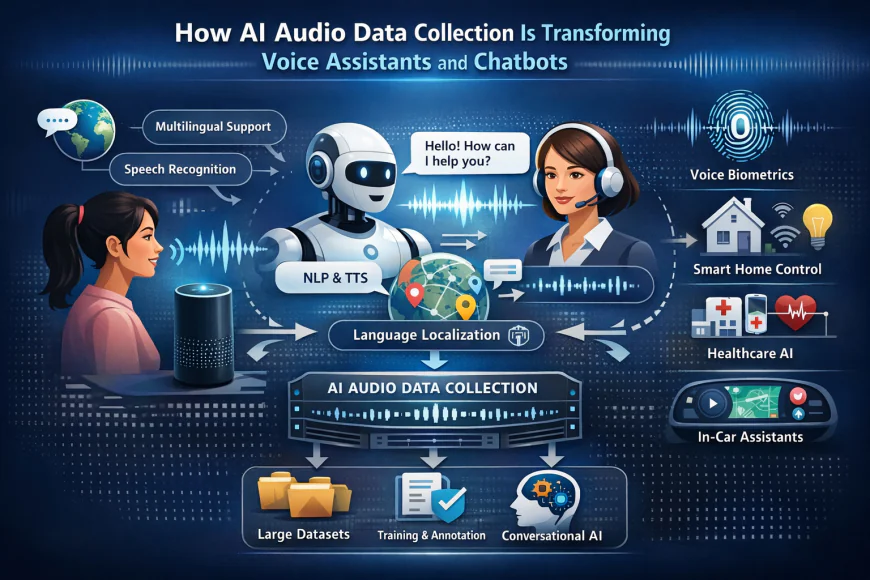
AI audio data collection is evolving into a critical business function rather than just a technical process.
 vanesa1
Introduction
Voice is quickly becoming the most natural interface between humans and technology. From virtual assistants and voice search to automated support systems, businesses are investing heavily in voice-driven solutions. At the core of this transformation lies AI audio data collection a process that is evolving rapidly in 2026 and beyond.
Today, companies are no longer just collecting audio data; they are focusing on quality, diversity, scalability, and compliance. As AI systems become more advanced, the demand for well-structured and high-quality audio datasets continues to grow. Businesses that understand and adopt these trends early will gain a strong competitive advantage in the global AI market.
What Is Changing in AI Audio Data Collection in 2026?
AI audio data collection has shifted from simple voice recording to a strategic, data-driven approach. Businesses are now prioritizing:
-
Real-world conversational data over scripted recordings
-
Multilingual and accent-rich datasets
-
Context-aware and emotion-driven audio inputs
-
Scalable data pipelines for continuous improvement
“The future of AI is not just intelligent it is data-centric.”
This shift is redefining how AI models are trained and deployed.
Why Are Businesses Focusing More on Audio Data Quality?
Does better data really improve AI performance?
Absolutely. The accuracy of speech recognition and conversational AI systems depends directly on the quality of audio data.
High-quality AI audio data collection helps:
-
Reduce speech recognition errors
-
Improve contextual understanding
-
Enhance user experience
-
Deliver more accurate real-time responses
Key insight:
“Better data leads to smarter AI systems and better business outcomes.”
What Are the Key Trends in AI Audio Data Collection?
1. Rise of Multilingual and Multicultural Datasets
Global businesses need AI systems that can understand users from different regions. AI audio data collection now includes:
-
Multiple languages and dialects
-
Regional accents and speech patterns
-
Code-switching (mixing languages in conversation)
This trend is especially important for countries like India and global markets where diversity is high.
-
Real-World Data Over Synthetic Data
While synthetic data is useful, real-world audio is becoming more valuable.
Businesses are focusing on:
-
Natural conversations instead of scripted audio
-
Real-life environments with noise and interruptions
-
Authentic user interactions
“Real-world data builds AI systems that perform in real-world conditions.”
-
Advanced Annotation and Data Labeling
Annotation has become more sophisticated in 2026. It now includes:
-
Speech-to-text transcription
-
Emotion and sentiment tagging
-
Intent recognition
-
Speaker identification
Accurate annotation ensures that AI systems understand not just words, but meaning.
-
Integration of AI in Data Collection Processes
AI is now being used to improve its own data pipeline.
This includes:
-
AI-assisted annotation tools
-
Automated quality checks
-
Real-time data validation
These innovations help reduce costs and improve efficiency.
-
Focus on Data Privacy and Compliance
With increasing regulations worldwide, businesses must ensure that AI audio data collection follows strict privacy standards.
Key practices include:
-
Consent-based data collection
-
Data anonymization
-
Compliance with global regulations
“Trust in data handling is becoming as important as the data itself.”
-
Edge AI and Real-Time Processing
With the growth of edge computing, AI systems are expected to process voice data instantly.
AI audio data collection is adapting by:
-
Training models on real-time conversational datasets
-
Optimizing for low-latency environments
-
Supporting offline and on-device processing
How Do These Trends Impact Businesses?
How can companies use these trends to grow?
Businesses that adopt modern AI audio data collection strategies can:
-
Build more accurate voice assistants
-
Improve customer support with AI voice bots
-
Gain insights from voice analytics
-
Expand into global markets with multilingual AI
Voice technology is becoming a key differentiator across industries.
What Industries Are Driving Demand for AI Audio Data?
Several industries are leading the adoption of AI audio data collection:
Customer Experience
-
Voice-based support systems
-
Call analytics and sentiment detection
Healthcare
-
Voice documentation and transcription
-
Remote patient interaction systems
Automotive
-
Voice-enabled navigation and controls
-
Driver safety systems
Fintech
-
Voice authentication
-
Fraud detection
Each of these sectors depends on high-quality audio datasets to deliver reliable performance.
What Challenges Should Businesses Be Aware Of?
Despite the opportunities, AI audio data collection comes with challenges:
-
High cost of annotation
-
Difficulty in collecting diverse datasets
-
Data privacy concerns
-
Maintaining consistency at scale
Key takeaway:
“Overcoming data challenges is essential for long-term AI success.”
How Can Businesses Build an Effective AI Audio Data Strategy?
To stay competitive, businesses should:
-
Focus on quality over quantity
-
Invest in diverse and inclusive datasets
-
Use advanced annotation tools
-
Continuously update and refine data
-
Partner with experienced providers
A strong data strategy ensures better AI performance and scalability.
Final Thoughts
AI audio data collection is evolving into a critical business function rather than just a technical process. The trends shaping 2026 and beyond highlight the importance of quality, diversity, and real-world applicability in building effective AI systems.
Businesses that adapt to these trends will not only improve their AI capabilities but also deliver better user experiences and gain a competitive edge.
“The future of voice AI belongs to companies that invest in the right data today.”
Frequently Asked Questions
What are the latest trends in AI audio data collection?
Key trends include multilingual datasets, real-world audio collection, advanced annotation, and AI-driven data processing.
Why is AI audio data collection important for businesses?
It helps improve speech recognition accuracy, enhances customer experience, and enables scalable AI solutions.
How does data quality impact AI performance?
High-quality data reduces errors and improves the accuracy and reliability of AI systems.
What challenges exist in AI audio data collection?
Challenges include data privacy, annotation costs, and collecting diverse datasets.
How can businesses improve their audio data collection strategy?
By focusing on quality, using advanced tools, and partnering with experienced data providers.