Cloud Hosting Explained: 7 Powerful Reasons Businesses Are Switching Fast
Cloud hosting explained: discover 7 powerful reasons businesses are switching, including better speed, scalability, uptime, and cost efficiency for modern websites.
 alisonsummit1990

A slow site costs money. So does downtime. When traffic spikes during a sale, holiday rush, or campaign launch, weak hosting quickly shows its cracks. We've seen this with online stores, mall directories, booking sites, and growing business websites: when the old setup starts choking, customer trust drops fast.
That’s why cloud hosting is becoming a hot topic in boardrooms, IT teams, and website planning meetings. In simple terms, it means your website runs on a group of connected servers instead of relying on just one machine. If demand rises, resources can scale.
If one server has trouble, another can help carry the load. NIST defines cloud computing as on-demand access to shared, configurable resources, and Omdia reported that global cloud infrastructure spending reached $102.6 billion in Q3 2025, up 25% year over year, showing how fast the market is moving into 2026.
For most site owners, the appeal is easy to understand. Cloud hosting can improve scalability, uptime, speed, security, and cost control. For businesses that cannot afford slow checkouts, broken pages, or surprise outages, that matters.
What Is Cloud Hosting?
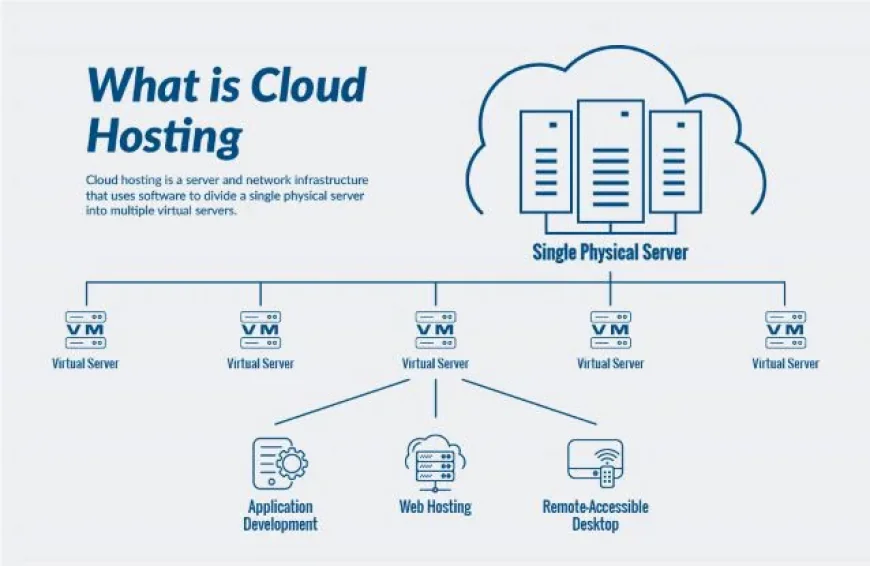
Cloud hosting is a type of web hosting that uses multiple connected servers to power a website or application. Instead of placing everything on one physical server, the hosting environment spreads resources across a wider network.
Think of it like running a busy shopping mall with one security guard, one power source, and one entrance versus having a full team, backup power, and multiple access points. In a single-server setup, one weak link can cause a bigger problem. In a cloud setup, the workload is shared more intelligently.
That is the big difference between this model and traditional single-server hosting. Traditional hosting depends heavily on one machine. If that machine is overloaded or fails, your website may slow down or go offline. In a cloud setup, the infrastructure is distributed, so there is more room to balance demand and support continuity.
How Cloud Hosting Works
Behind the scenes, cloud hosting pulls computing resources from a network of virtual and physical servers. Those resources can include CPU, RAM, storage, and bandwidth.
Why Businesses Are Switching Fast
The shift is not hype alone. Businesses want room to grow without rebuilding their entire hosting stack every few months. They also want better resilience, easier scaling, and stronger protection around customer data.
For many teams, that is where managed cloud hosting stands out. A well-managed provider helps with updates, monitoring, patching, backups, and performance tuning, which reduces the technical burden on internal staff.
Top Benefits of Cloud Hosting for Modern Websites
-
Scalability on Demand
-
This is often the first reason businesses switch. Cloud hosting makes it easier to increase or reduce resources as needed. That is ideal for growing sites, seasonal promotions, event pages, and online stores with uneven traffic.
-
A shopping mall website may get modest daily traffic, then see a sudden jump during a holiday campaign.
-
Google Cloud documentation on high availability focuses on designing across multiple zones to reduce downtime and maintain business continuity. For businesses, better uptime means fewer missed leads, fewer abandoned carts, and less damage to brand trust.
-
Faster Performance
-
Speed is not a luxury anymore. It affects user experience, search visibility, and conversions. Google’s published guidance says 53% of users abandon a mobile site if it takes longer than three seconds to load, while Cloudflare notes that better website performance consistently improves conversion rates.
-
That is why cloud server hosting appeals to fast-moving websites. With the right setup, websites can deliver content more efficiently, especially during traffic spikes.
-
Cost Efficiency
-
A lot of businesses move to this model because it can be more cost-efficient than buying and maintaining oversized infrastructure from day one. In many environments, you pay for the resources you use instead of locking yourself into a fixed hardware investment. That does not always mean cheap. VPS hosting gives you a slice of a server environment, which is a step up, but it still has more fixed limits than many cloud deployments.
-
Dedicated hosting gives you an entire server. It can be powerful, but it is also less flexible and can cost more upfront. This model sits in a strong middle position for many businesses. It gives more flexibility than shared or VPS hosting and often more scalable economics than dedicated hosting. It also removes the single-server dependency that causes many traditional hosting bottlenecks.
Who Should Use Cloud Hosting?
Cloud hosting is a smart fit for eCommerce websites, startups, SaaS businesses, high-traffic blogs, agencies managing multiple client sites, businesses expecting fast growth, and websites with seasonal or campaign-driven traffic swings.
From experience, the best candidates are websites where uptime, speed, and growth all matter at once. That includes retail brands, shopping malls, service companies, and online businesses trying to scale without friction.
Common Features to Look for in a Provider
When comparing providers, do not focus only on price. Look for the features that actually protect performance and reduce risk. If your team is lean, managed cloud hosting can be worth the extra cost because it saves time and reduces operational mistakes.
Potential Drawbacks
No hosting model is perfect. Review uptime promises. Compare how pricing works. Ask about backups, security, migration help, and what happens when usage spikes. Also, read recent customer reviews with a critical eye. A flashy offer means very little if support is weak when your website is under pressure.
Final Thoughts: Is Cloud Hosting Worth It?
For most modern websites, yes. Cloud hosting gives businesses more flexibility, stronger reliability, better performance, and room to grow without being trapped by old infrastructure.
We recommend it most often for websites that need to stay fast, available, and ready for change. That covers a wide range of use cases, from local business sites to large eCommerce operations.
FAQs
1. What is cloud hosting in simple words?
It is a hosting setup where your website uses a network of connected servers instead of depending on a single server.
2. Is cloud hosting good for e-commerce websites?
Yes. It is especially useful for online stores that need better speed, uptime, and flexibility during traffic spikes.
3. What is the difference between managed cloud hosting and regular cloud hosting?
Managed cloud hosting includes provider support for tasks like monitoring, updates, backups, and maintenance. Regular plans often leave more of that work to you.
4. Is cloud server hosting expensive?
Not always. It depends on your setup, traffic, and provider. Many businesses like the flexible pricing because they can align costs more closely with actual use.
5. How do I choose the best cloud hosting provider?
Look at uptime, support quality, backup features, security tools, scalability, storage speed, and pricing structure before you decide.