DA vs Google Rankings: Does High Domain Authority Guarantee Top Position?
A high Domain Authority (DA) score can indicate strong backlink potential, but it does not guarantee top Google rankings. Google prioritizes content relevance, user experience, technical SEO, and search intent over third-party metrics like DA. To achieve consistent first-page rankings, businesses must focus on a comprehensive SEO strategy rather than relying solely on Domain Authority.
 rachelward
Understand High Domain Authority and Google Rankings: Are Top Spots Guaranteed?
Search engine optimisation is a complex field, where multiple factors influence whether a website ranks on the first page of Google. Among these factors, Domain Authority (DA) has become a popular metric in the SEO community. Created by Moz, DA scores range from 1 to 100, reflecting a website’s perceived authority based on its backlink profile, content quality, and other signals. Many website owners and marketers wonder: does a high DA guarantee top Google rankings?
The short answer is no. While Domain Authority can be an indicator of potential ranking strength, it is not a direct ranking factor for Google. Understanding the relationship between DA and Google rankings, and how they influence each other, is critical for businesses seeking sustainable online growth. In this blog, we will explore the nuances of DA, how it relates to rankings, common misconceptions, and actionable strategies to improve organic visibility.
What is Domain Authority and How is it Calculated?
Domain Authority is a proprietary metric developed by Moz to predict how well a website is likely to rank in search engine results. It considers multiple factors, including the number and quality of backlinks, linking root domains, and other SEO signals. DA scores are logarithmic, meaning it is significantly easier to increase a score from 20 to 30 than from 70 to 80.
It is important to note that DA is an independent metric created by Moz and is not directly used by Google’s ranking algorithm. Google evaluates websites using its own complex ranking signals, including relevance, content quality, user engagement, technical SEO, and trustworthiness. Therefore, while DA can indicate a site’s authority compared to competitors, it does not guarantee first-page rankings.
Why High DA Doesn’t Always Equal High Rankings
Many new website owners make the mistake of assuming that a high DA will automatically result in top Google rankings. In reality, there are several reasons why this assumption is flawed:
1. DA is Relative, Not Absolute
DA measures a website’s authority relative to other sites. A high DA score in a niche with low competition may be less impressive than a lower DA score in a highly competitive industry. Google, however, evaluates rankings based on relevance and user intent, rather than third-party authority metrics.
2. On-Page SEO Matters More Than DA Alone
Even websites with high DA scores can fail to rank well if their on-page SEO is weak. Elements like meta titles, headings, content structure, internal linking, and page speed directly influence how Google interprets the relevance and quality of content. Without optimizing these factors, DA alone cannot guarantee top positions.
3. User Experience and Engagement are Key Signals
Google increasingly relies on user behavior metrics, such as dwell time, bounce rate, and click-through rate, to assess content quality. High DA sites that offer poor user experience may struggle to rank, while lower DA websites providing highly relevant, engaging content can outperform them.
Factors That Influence Google Rankings Beyond DA
Content Relevance and Quality
Google prioritizes content that best answers a user’s query. Keyword optimization, semantic relevance, and comprehensiveness of information all play a significant role. Websites with high DA but shallow or outdated content may rank lower than newer, high-quality content optimized for user intent.
Technical SEO and Website Health
Elements like page speed, mobile responsiveness, secure connections (HTTPS), structured data, and proper indexing are crucial. Google’s algorithms evaluate these factors when determining rankings. Websites with excellent DA but poor technical SEO may fail to reach their potential in search results.
Backlink Quality Over Quantity
While DA is influenced by the number and quality of backlinks, Google assesses each link individually for relevance and authority. A website with a few high-quality, contextually relevant backlinks may outrank a site with higher DA but a large number of low-quality or irrelevant links.
Topical Authority and Expertise
Google increasingly favors websites that demonstrate expertise, authority, and trustworthiness (E-A-T) within a specific niche. A high DA does not automatically imply topical authority. Sites that consistently publish authoritative content on a topic are more likely to secure top rankings, even with a lower DA score.
Personal Insights from Experience
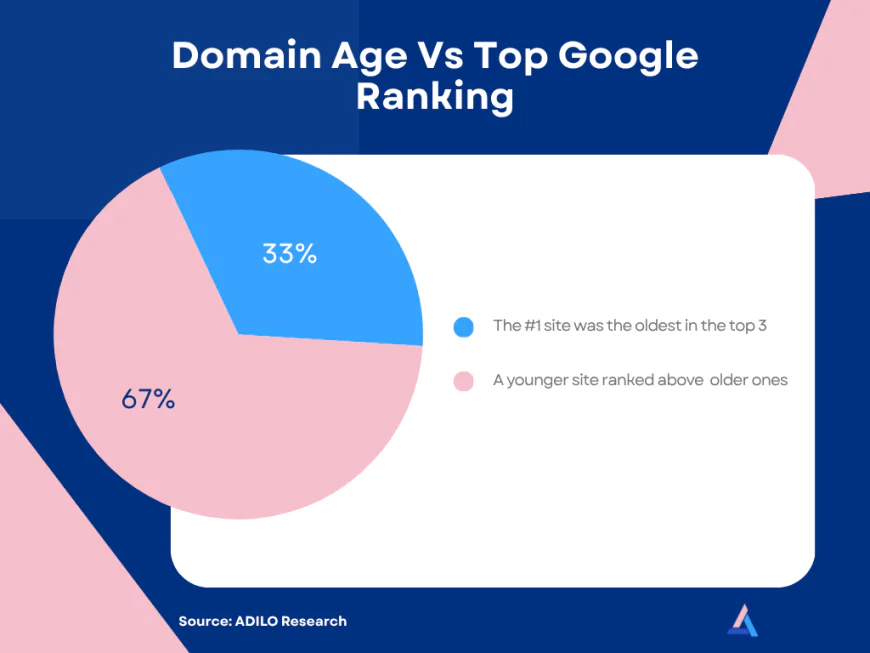
In my experience working with businesses and clients, including insights shared by Top Digital Marketing Agencies, I’ve observed many cases where high DA sites did not achieve first-page rankings, while lower DA competitors outperformed them. For instance, a site with DA 75 but poorly structured content and slow page speed struggled for competitive keywords, whereas a smaller site with DA 40 that focused on high-quality, well-organized content, internal linking, and user engagement consistently outranked higher DA competitors.
This reinforces the notion that while DA is a helpful benchmark, Google rankings depend on a holistic SEO approach. On-page SEO, content relevance, technical health, and user experience often outweigh the numerical value of DA, particularly for competitive search queries.
How to Leverage DA Without Relying on It
While high DA alone cannot guarantee top rankings, it can still provide value if used strategically:
-
Competitive Analysis: Compare your DA with competitors to assess relative strength and identify areas for improvement.
-
Backlink Strategy: Use DA to prioritize outreach to authoritative sites for guest posts or content collaborations.
-
Monitoring Growth: Track DA trends over time to evaluate the impact of your SEO efforts.
Remember, DA should complement, not replace, a comprehensive SEO strategy that includes content optimization, technical SEO, and link-building practices.
Common Misconceptions About DA and Rankings
-
“High DA guarantees Google’s first page” – False; relevance, content quality, and technical SEO matter more.
-
“All backlinks are equally valuable” – False; Google evaluates links individually for context, relevance, and trust.
-
“DA can fix poor content” – False; strong content is non-negotiable for ranking success.
-
“DA is updated in real-time” – False; DA is periodically recalculated by Moz and may not reflect current link profile changes immediately.
Conclusion
High Domain Authority is a valuable indicator of a website’s potential strength but does not guarantee top Google rankings. While DA reflects backlink quality and general authority, Google’s ranking algorithm considers a multitude of factors, including content relevance, technical SEO, user experience, and topical authority.
For businesses aiming to achieve sustainable search visibility, focusing solely on DA can be misleading. A comprehensive approach combining on-page optimization, technical health, quality content, and strategic backlink acquisition is essential for achieving consistent top rankings. DA should be treated as a reference point rather than a guarantee, guiding strategy rather than dictating it.
Frequently Asked Questions (FAQs)
Does a high Domain Authority mean my website will rank first on Google?
No, Domain Authority is a third-party metric and not a direct Google ranking factor. High DA can indicate strong backlink profiles, but Google evaluates content relevance, user engagement, technical SEO, and other signals when determining rankings. Sites with lower DA can outrank higher DA sites if they provide better user experience and content quality.
How is Domain Authority calculated, and can I influence it?
Domain Authority is calculated by Moz using factors like the number of linking root domains, link quality, and overall SEO signals. While you cannot control Moz’s algorithm, you can influence DA by building high-quality backlinks, creating authoritative content, and maintaining a healthy site structure. Regular audits and link-building strategies can gradually improve your DA score.
Should I focus on DA or Google rankings for my SEO strategy?
Google rankings should be your primary focus, as they directly impact organic traffic and visibility. DA is a useful reference for competitive analysis and backlink strategy but should not replace efforts in content creation, on-page SEO, and technical optimization. A balanced strategy ensures both authority and practical ranking improvements.
Can a website with low DA compete with high DA websites?
Yes, websites with low DA can compete effectively, especially when content is highly relevant, well-optimized, and technically sound. Search engines prioritize user intent and content quality. By focusing on on-page SEO, internal linking, and user engagement, smaller sites can rank above higher DA competitors in many niches.
How often should I monitor my Domain Authority?
Monitoring DA every 2–3 months is sufficient to track trends and assess the impact of link-building efforts. Frequent checks can help identify unnatural fluctuations in backlinks and guide your outreach strategy. However, DA updates are periodic and should be used alongside actual ranking data from Google Search Console for a complete performance overview.
Can improving Domain Authority alone boost my Google rankings?
No, improving Domain Authority alone will not automatically boost Google rankings. DA reflects potential authority based on backlinks and is a third-party metric, while Google evaluates relevance, content quality, user engagement, and technical SEO. A high DA without strong content and optimization may not translate into top rankings.
How does link quality impact DA and ranking differently?
High-quality backlinks increase both DA and ranking potential, but their effects differ. DA considers overall backlink strength, while Google evaluates each link’s relevance and trustworthiness when determining ranking. Low-quality or irrelevant links may inflate DA slightly but can harm rankings if Google detects manipulative linking patterns.
Is DA more important for new websites or established sites?
For new websites, DA is less predictive of immediate rankings because Google prioritizes relevance, content quality, and on-page optimization. Established sites with strong backlink profiles may benefit more from high DA as an authority signal. However, even older sites must focus on content and user experience to maintain or improve rankings.
Can a website have high DA but low traffic?
Yes, a website can have high Domain Authority yet receive low organic traffic. DA measures backlink strength and perceived authority, not actual search visibility. Sites may have strong backlinks from authoritative sources but rank poorly due to weak on-page SEO, irrelevant content, or high competition for targeted keywords.
How long does it take for DA improvements to affect rankings?
Even when Domain Authority increases, the impact on rankings may take weeks or months. Google does not use DA directly, so ranking improvements depend on how backlinks influence trust, authority, and relevance signals. Consistent content updates, on-page SEO, and high-quality link acquisition accelerate the effect of DA on organic visibility.