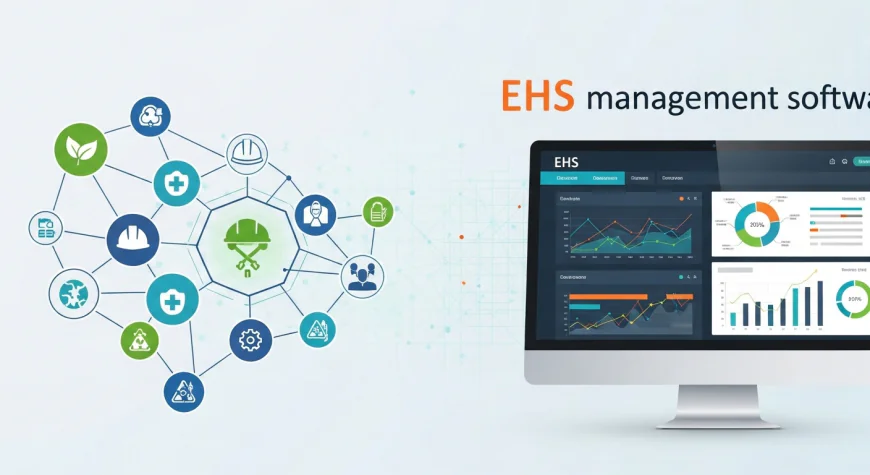
How EHS Management Software Improves Safety And Compliance
Workplace safety and regulatory compliance are critical responsibilities for organizations across industries. Managing incidents, inspections, audits, training records, and hazard reporting through manual methods often leads to delays, data loss, and compliance gaps. This is where EHS management software becomes an essential tool for structured safety management.
EHS management software centralizes safety data, standardizes reporting, and creates a clear system for monitoring workplace risks. When safety processes are digitized, organizations gain better visibility into hazards, corrective actions, and compliance requirements. This improves response time and reduces the chance of repeated incidents.
Using EHS management software allows teams to document, track, and analyze safety activities in real time. This strengthens workplace safety culture while helping organizations meet regulatory obligations with confidence.
Role of EHS management software in modern safety practices
EHS management software supports safety teams by replacing paper based systems with digital workflows.
Centralized safety data
All safety records are stored in one system including
- Incident reports
- Inspection checklists
- Audit findings
- Training records
- Risk assessments
Standardized reporting process
Employees follow the same reporting structure, which improves data accuracy.
Real time monitoring
Managers can track safety status without waiting for manual reports.
This structured approach improves consistency across departments.
EHS management software for incident reporting and tracking
Incident reporting is one of the core functions of EHS management software.
Quick reporting by employees
Workers can report incidents immediately using digital forms.
Automatic incident logs
Every report is stored with time, date, and location details.
Tracking corrective actions
Assigned tasks ensure issues are resolved and documented.
This reduces the chances of unresolved hazards.
EHS management software for hazard identification
Hazard identification becomes easier when supported by digital tools.
Digital hazard reporting forms
Employees can submit hazard observations quickly.
Risk categorization
Hazards are classified based on severity and likelihood.
Preventive action tracking
Actions are monitored until completion.
This proactive method reduces workplace risks.
EHS management software for inspections and audits
Inspections and audits are essential for compliance.
Digital inspection checklists
Inspectors use predefined forms for consistency.
Audit trail maintenance
All inspection data is stored for future reference.
Compliance documentation
Records are available during regulatory reviews.
This ensures preparedness for audits.
EHS management software for training management
Training is important for safety awareness.
Training record storage
All employee training data is saved in the system.
Certification tracking
Alerts are generated for expiring certifications.
Skill gap identification
Managers can see who needs additional training.
This improves workforce readiness.
EHS management software for regulatory compliance
Meeting regulatory standards requires accurate documentation.
Automated compliance tracking
The system tracks deadlines and requirements.
Easy document retrieval
Documents are accessible during inspections.
Reduced paperwork errors
Digital records minimize human mistakes.
This strengthens compliance performance.
EHS management software for data analysis and reporting
Safety data becomes useful when analyzed properly.
Incident trend analysis
Patterns of repeated incidents can be identified.
Performance dashboards
Managers see safety metrics visually.
Report generation
Custom reports can be created for management review.
This supports informed decision making.
EHS management software for corrective and preventive actions
Corrective actions must be tracked carefully.
Task assignment
Responsible persons are assigned to each action.
Deadline tracking
Reminders ensure timely completion.
Verification of completion
Actions are reviewed and closed properly.
This prevents issues from being ignored.
EHS management software for document control
Managing safety documents manually is difficult.
Central document repository
Policies and procedures are stored digitally.
Version control
Latest document versions are always available.
Controlled access
Only authorized users can edit documents.
This improves document reliability.
EHS management software for communication across teams
Safety communication improves with digital tools.
Notifications and alerts
Users receive alerts for pending tasks.
Shared access to reports
Teams can view safety data anytime.
Improved coordination
Departments work together with shared information.
This enhances teamwork in safety management.
Comparison of manual safety system and EHS management software
| Feature |
Manual system |
EHS management software |
| Data storage |
Paper files |
Digital centralized system |
| Reporting speed |
Slow |
Instant |
| Error chances |
High |
Low |
| Audit readiness |
Difficult |
Easy |
| Data analysis |
Limited |
Advanced |
| Tracking actions |
Hard |
Automated |
This comparison shows the advantages of digital safety systems.
EHS management software for risk management
Risk management requires continuous monitoring.
Risk assessment forms
Digital tools simplify risk evaluation.
Risk ranking
Hazards are prioritized based on severity.
Continuous review
Risks are monitored regularly.
This reduces workplace accidents.
EHS management software for multi location organizations
Organizations with multiple sites benefit greatly.
Central monitoring
Head office can track safety across locations.
Standard safety procedures
Same system used everywhere.
Unified reporting
All sites report in the same format.
This improves overall safety governance.
Benefits of EHS management software for management teams
Management teams gain better control over safety operations.
- Clear visibility of safety metrics
- Faster decision making
- Improved accountability
- Reduced compliance risks
These benefits support organizational goals.
EHS management software and safety culture improvement
Digital systems encourage active participation in safety.
Employee involvement
Easy reporting increases participation.
Transparency in safety actions
Everyone sees progress and results.
Continuous improvement
Data helps refine safety practices.
This strengthens workplace safety culture.
Long term impact of EHS management software
Over time, organizations see measurable improvements.
- Fewer incidents
- Better compliance record
- Organized documentation
- Improved employee awareness
These long term results justify the use of EHS management software.
Final thoughts on EHS management software in safety and compliance
EHS management software provides a structured and reliable way to manage workplace safety and regulatory compliance. By digitizing incident reporting, hazard management, inspections, audits, and training records, organizations gain better control over safety processes.
With centralized data, automated tracking, and clear visibility, EHS management software helps reduce risks and improve compliance across all levels of the organization.



 MuhammadTahir