
IGF-1 DES Nasal Spray Breakdown: How Intranasal Peptide Transport Works
The IGF-1 DES peptide stands out due to its truncated structure, reduced binding protein affinity, and enhanced receptor interaction.
 fletcherpearson
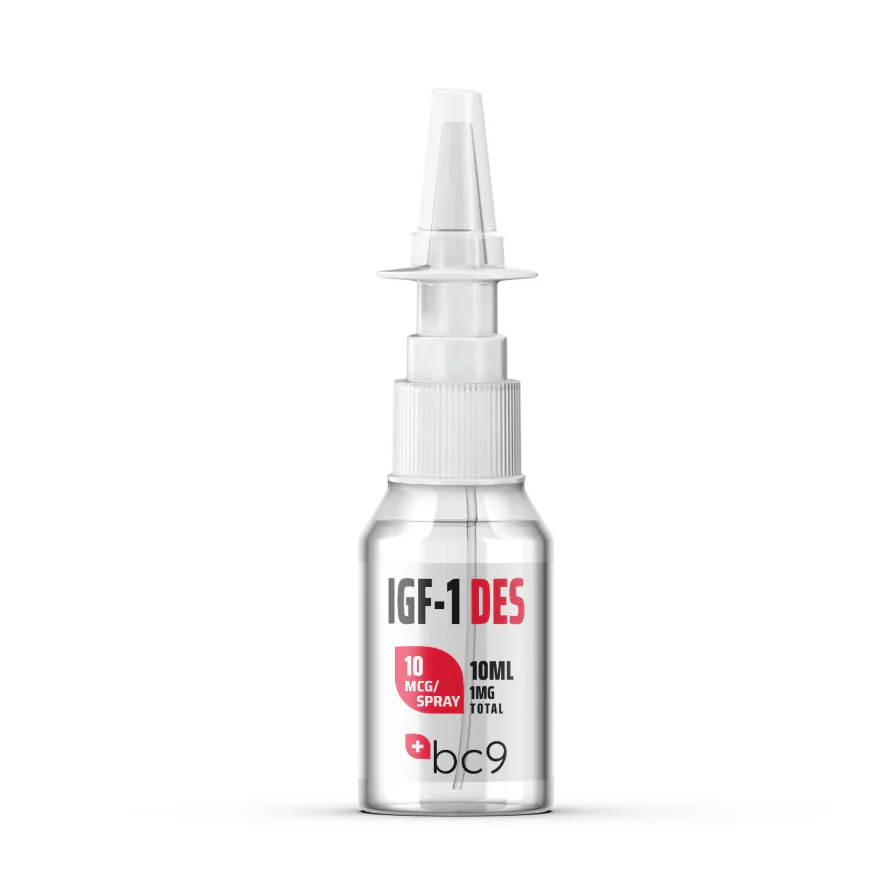
The IGF-1 DES peptide represents one of the most studied truncated variants of insulin-like growth factor-1 in modern biochemical research. Its structural modification, receptor affinity profile, and tissue-level signaling activity distinguish it from full-length IGF-1, particularly when evaluated in alternative delivery systems such as intranasal administration.
This comprehensive breakdown explores the molecular structure of IGF-1 DES, the biological transport dynamics of intranasal peptide absorption, and the cellular signaling cascades involved in its research applications.
What Is IGF-1 DES Peptide?
IGF-1 DES (Des(1–3) IGF-1) is a truncated analog of insulin-like growth factor-1 that lacks the first three amino acids at the N-terminus. This structural alteration significantly reduces its binding affinity to IGF-binding proteins (IGFBPs), particularly IGFBP-3, thereby increasing its bioavailability at receptor sites.
Structural Characteristics
- Full-length IGF-1: 70 amino acids
- IGF-1 DES peptide: 67 amino acids
- Reduced IGFBP binding
- Enhanced receptor-level interaction
This modification results in a compound that exhibits amplified localized activity in controlled research settings, particularly in muscle cell and neuronal tissue models.
Intranasal Peptide Delivery: Mechanism of Transport
Intranasal administration is increasingly examined for peptides due to its capacity to bypass hepatic first-pass metabolism and, in certain cases, circumvent the blood–brain barrier (BBB).
Primary Transport Pathways
- Olfactory Nerve Pathway
- Trigeminal Nerve Pathway
- Systemic Capillary Absorption
The nasal cavity contains highly vascularized epithelium and direct neural connections to the central nervous system. This unique anatomy facilitates both systemic absorption and potential direct brain delivery.
Molecular Interaction: IGF-1 DES Peptide and IGF-1 Receptors
The IGF-1 DES peptide primarily exerts its activity through the IGF-1 receptor (IGF1R), a transmembrane tyrosine kinase receptor.
Receptor Activation Cascade
Upon binding:
- IGF1R autophosphorylates
- IRS-1 and IRS-2 recruitment occurs
- PI3K/Akt signaling is activated
- MAPK/ERK pathways are stimulated
These cascades regulate:
- Cellular proliferation
- Protein synthesis
- Glucose metabolism
- Neuroprotective signaling
Reduced interaction with binding proteins enables more immediate receptor engagement compared to full-length IGF-1 under controlled experimental conditions.
Intranasal Bioavailability and Absorption Factors
Intranasal delivery efficiency depends on several physiological and formulation variables:
Key Determinants
- Molecular weight (IGF-1 DES ≈ 7.6 kDa)
- Lipophilicity
- Nasal mucociliary clearance rate
- Enzymatic degradation within the nasal cavity
- Formulation pH and excipients
Peptides administered intranasally may undergo:
- Paracellular transport (tight junction diffusion)
- Transcellular transport (endocytosis)
- Axonal transport via neuronal pathways
Permeation enhancers and mucoadhesive agents are frequently explored in research settings to optimize peptide stability and residence time.
Blood–Brain Barrier Bypass Potential
One of the primary scientific interests in intranasal IGF-1 DES peptide research is its theoretical capacity to access central nervous system tissues.
Unlike systemic injection routes that rely on circulatory transport, intranasal administration may provide:
- Direct olfactory bulb delivery
- Reduced systemic exposure
- Lower peripheral degradation
This makes intranasal peptide transport a focal point in neurobiological research models.
Comparative Analysis: IGF-1 DES vs Full-Length IGF-1
|
Characteristic |
IGF-1 DES Peptide |
Full-Length IGF-1 |
|
Amino Acids |
67 |
70 |
|
IGFBP Binding |
Reduced |
High |
|
Local Activity |
Enhanced |
Moderated |
|
Molecular Weight |
~7.6 kDa |
~7.65 kDa |
|
Receptor Affinity |
Strong |
Strong |
The reduced binding to IGFBPs allows IGF-1 DES peptide to remain unbound and biologically active for immediate receptor interaction in localized tissue environments.
Stability Considerations in Nasal Formulations
Peptides are inherently susceptible to degradation by proteases. For intranasal applications, formulation stability strategies may include:
- Lyophilized peptide reconstitution systems
- Buffered aqueous carriers
- Antioxidant stabilization
- Cold-chain storage
Ensuring structural integrity is essential for reproducible research outcomes.
Cellular Research Applications
The IGF-1 DES peptide has been evaluated in:
- Skeletal muscle satellite cell activation models
- Neuronal survival assays
- Myoblast proliferation studies
- Glucose uptake research
Its receptor-level amplification makes it particularly relevant in controlled laboratory environments assessing localized growth factor signaling.
Pharmacokinetic Considerations in Intranasal Research
Pharmacokinetic parameters explored in peptide transport research typically include:
- Tmax (time to peak concentration)
- Cmax (maximum concentration achieved)
- Area under the curve (AUC)
- Tissue distribution patterns
Intranasal delivery may result in:
- Rapid onset
- Variable systemic absorption
- Enhanced CNS targeting potential
Quantitative evaluation requires precise analytical techniques such as ELISA or mass spectrometry.
Safety and Regulatory Research Context
IGF-1 DES peptide is commonly categorized within research compound frameworks and is not approved for clinical therapeutic use. Investigational protocols require:
- Sterile preparation
- Controlled laboratory handling
- Institutional compliance
Rigorous purity testing and certificate-of-analysis verification remain essential for research reproducibility.
Conclusion: Precision Transport and Amplified Receptor Activity
The IGF-1 DES peptide stands out due to its truncated structure, reduced binding protein affinity, and enhanced receptor interaction. When paired with intranasal delivery systems, it presents a compelling model for examining direct peptide transport, receptor activation, and localized signaling pathways.
Intranasal transport mechanisms including olfactory and trigeminal pathways provide a scientifically significant route for peptide research, particularly in studies focused on central nervous system accessibility and rapid tissue interaction.