
OpenAI vs ChatGPT: Key Differences Explained
Learn the key differences between OpenAI vs ChatGPT, including purpose, use cases, and which AI solution fits your needs best.
 kristencorley2
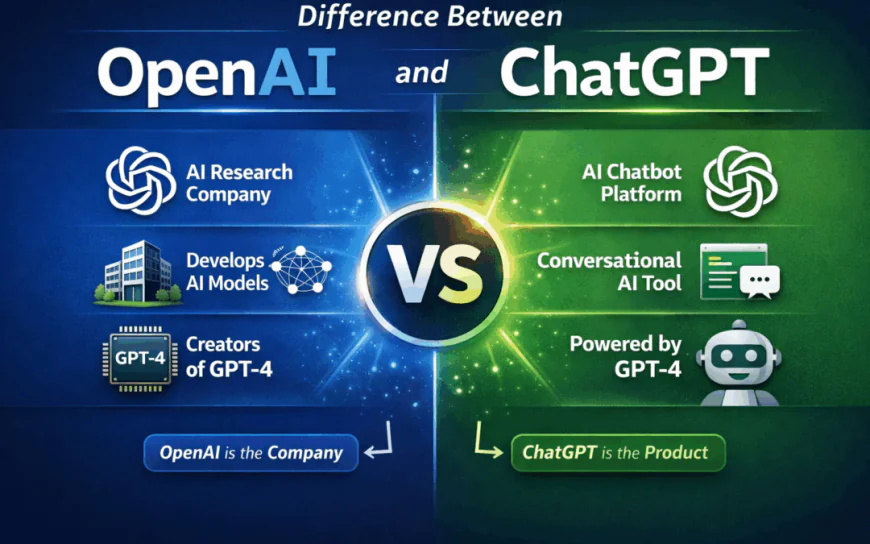
When people explore artificial intelligence tools, confusion often starts with names. Many users assume OpenAI and ChatGPT are the same thing, but in reality, they serve very different roles in the AI ecosystem. Understanding OpenAI vs ChatGPT helps businesses, developers, and everyday users choose the right approach when working with AI technology.
Instead of looking at this comparison from a technical definition angle, it is more useful to view it from a practical and usage-based perspective.
Why the Confusion Exists
The confusion between OpenAI and ChatGPT exists because both are closely connected. ChatGPT is built using technology developed by OpenAI, which makes the distinction less obvious for non-technical users. However, their goals, scope, and usage differ significantly.
Think of OpenAI as the creator of AI systems, while ChatGPT is one specific tool powered by those systems.
OpenAI vs ChatGPT From a Practical View
Rather than defining each separately, it is easier to understand OpenAI vs ChatGPT by looking at how people actually use them.
A clear breakdown of Key AI Differences shows that OpenAI operates at the infrastructure and research level, while ChatGPT focuses on direct user interaction. OpenAI builds and maintains the underlying AI models, whereas ChatGPT presents those models in a conversational format that anyone can use.
How OpenAI Is Used
OpenAI primarily serves developers, startups, and enterprises. Its tools are accessed through APIs that allow businesses to integrate AI into their own platforms. Companies use OpenAI to build custom chatbots, automate workflows, analyze large datasets, and power AI-driven applications.
OpenAI is not limited to one product. It supports multiple AI models designed for text generation, image creation, data processing, and advanced machine learning tasks. Its focus is long-term AI development and responsible innovation.
How ChatGPT Is Used
ChatGPT is designed for direct interaction. Users can ask questions, generate content, get explanations, brainstorm ideas, or receive help with coding and research. It does not require technical knowledge or integration work.
For individuals and small teams, ChatGPT acts as an AI assistant that improves productivity. Writers use it for drafts, marketers for ideas, students for learning support, and businesses for quick customer responses.
Key Functional Differences
The real difference between OpenAI vs ChatGPT lies in control and flexibility.
OpenAI offers customization and scalability. Businesses can design AI behavior, integrate models into systems, and control how AI responds within applications.
ChatGPT offers convenience. It provides ready-to-use AI without setup, making it ideal for quick tasks and everyday use.
Both rely on similar underlying technology, but the way users interact with them is completely different.
Which One Should You Choose
The choice depends on your goal.
If you want to build AI-powered products, automate business processes, or create customized AI solutions, OpenAI is the better option.
If your goal is content creation, research assistance, learning support, or conversational help, ChatGPT is more practical and accessible.
Understanding this difference helps avoid unrealistic expectations and ensures the right tool is used for the right purpose.
Final Thoughts
The debate around OpenAI vs ChatGPT becomes clear when viewed through real-world usage rather than technical definitions. OpenAI is the engine behind advanced AI innovation, while ChatGPT is a user-friendly application built on that engine.
Recognizing these Key AI Differences allows businesses and users to adopt AI more effectively, choose the right solutions, and fully benefit from modern artificial intelligence without confusion.