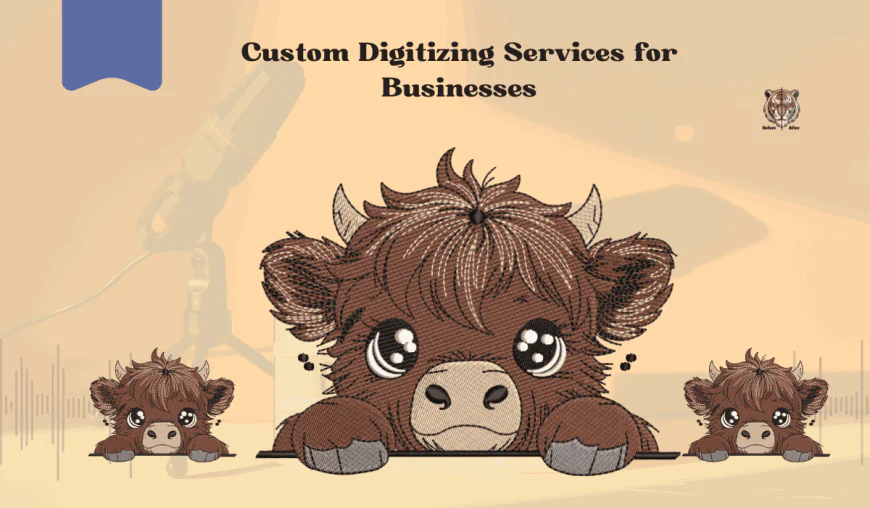
Custom Digitizing Services for Businesses
Learn how Custom Digitizing services support small and large businesses with quality embroidery, efficiency, and brand consistency.
 digitizing
Embroidery plays a critical role in branding, uniforms, promotional products, and retail apparel. Whether a business operates on a small scale or manages high-volume production, the quality of stitch files directly affects the final outcome. At the production level, Custom Digitizing ensures that artwork is converted into precise stitch instructions that match fabric type, garment structure, and machine capability. Without accurate digitizing, embroidery can suffer from distortion, thread breaks, and inconsistent results.
For both small startups and established enterprises, professional digitizing services provide the technical foundation needed to maintain quality and efficiency.
Understanding Custom Digitizing Services
Custom digitizing services involve manually transforming logos and artwork into machine-readable embroidery files. This process includes careful decisions about:
-
Stitch types (satin, fill, run stitch)
-
Stitch direction and flow
-
Density settings
-
Underlay structure
-
Pull compensation
These technical elements determine how thread interacts with fabric. Automated conversions may generate quick files, but professional digitizing focuses on real production performance rather than just on-screen appearance.
Why Small Businesses Benefit from Custom Digitizing
Building a Strong First Impression
For small embroidery shops or clothing startups, every order matters. A poorly stitched logo can affect customer confidence and repeat business. High-quality digitizing ensures clean edges, readable text, and balanced stitching.
This consistency helps small businesses:
-
Deliver professional results from the beginning
-
Reduce costly rework
-
Strengthen brand credibility
Managing Limited Resources Efficiently
Smaller operations often work with limited staff and tight deadlines. Machine interruptions due to thread breaks or density issues can slow production significantly. Proper digitizing minimizes these disruptions and improves workflow stability.
How Large Businesses Rely on Professional Digitizing
Handling High-Volume Production
Large apparel manufacturers and uniform suppliers process thousands of garments per order. Even minor digitizing errors can multiply quickly across bulk production.
Professional custom digitizing ensures:
-
Stable machine performance
-
Consistent logo reproduction
-
Reduced downtime
-
Lower material waste
When production runs smoothly, businesses meet deadlines and protect profit margins.
Maintaining Brand Consistency Across Locations
Companies operating across multiple regions require uniform branding. Digitized files must perform reliably on different machines and garment types. Accurate stitch planning ensures that logos appear identical across every batch.
Fabric-Specific Adjustments for All Business Sizes
Every garment type behaves differently under stitches. Custom digitizing services adjust settings based on fabric characteristics.
Examples include:
-
Stretch fabrics: Lighter density and proper underlay prevent distortion.
-
Heavy jackets: Balanced fill and stabilization ensure durability.
-
Caps: Special sequencing compensates for curved surfaces.
These refinements help both small and large businesses maintain consistent quality regardless of garment type.
Improving Machine Efficiency and Cost Control
Reducing Thread Breaks and Maintenance
Incorrect stitch sequencing and excessive density increase wear on machines. Professional digitizing reduces these risks by optimizing stitch paths and balancing coverage.
Benefits include:
-
Fewer machine stoppages
-
Lower maintenance expenses
-
Improved production speed
Minimizing Production Errors
Rejected garments increase costs and delay deliveries. By preparing technically optimized files, custom digitizing services lower the chances of embroidery defects during large production runs.
Real-World Scenario: Scaling Operations
Consider a small embroidery business that grows into a larger supplier handling corporate contracts. As order volume increases, technical precision becomes more important.
With professional digitizing:
-
Files are optimized for multi-head machines
-
Designs scale correctly for different garment sizes
-
Production remains stable during high-demand periods
This transition from small-scale to commercial-level production becomes smoother with reliable digitizing support.
Choosing the Right Custom Digitizing Partner
Both small and large businesses should look for providers who offer:
-
Manual digitizing expertise
-
Experience with commercial embroidery machines
-
Fabric-specific adjustments
-
Sample stitch-outs for testing
-
Reliable communication for revisions
A skilled digitizing partner understands that each project has unique production requirements.
Long-Term Advantages for Businesses
Investing in professional custom digitizing services leads to:
-
Consistent embroidery quality
-
Better production efficiency
-
Reduced operational costs
-
Improved client satisfaction
-
Stronger long-term business stability
Digitizing is not just a preparatory step; it directly influences profitability and brand presentation.
Conclusion
Custom digitizing services provide essential technical support for embroidery businesses of all sizes. From small startups building their reputation to large manufacturers managing bulk production, accurate digitizing ensures clean stitching, machine efficiency, and consistent branding. By prioritizing professional custom digitizing, businesses reduce production risks and create a reliable foundation for long-term growth.
FAQs
1. What is custom digitizing in embroidery?
Custom digitizing is the manual process of converting artwork into stitch files optimized for fabric type and embroidery machines.
2. Why do small businesses need professional digitizing?
It ensures high-quality results, reduces production errors, and helps build customer trust from the start.
3. How does digitizing support large-scale production?
It minimizes machine downtime, maintains consistency, and reduces waste across bulk orders.
4. Can one digitized file work for all garments?
Not always. Different fabrics and garment types often require specific adjustments for best results.
5. How can I evaluate a digitizing service provider?
Look for manual expertise, fabric knowledge, production experience, and the ability to provide test stitch-outs.