Are Overnight Pads Better Compared To Normal Pads?
Wondering if overnight pads are worth it? We compare overnight pads vs normal sanitary pads for leaks, comfort, and sleep. Find your perfect match here.
 Ahmed
Ahmed
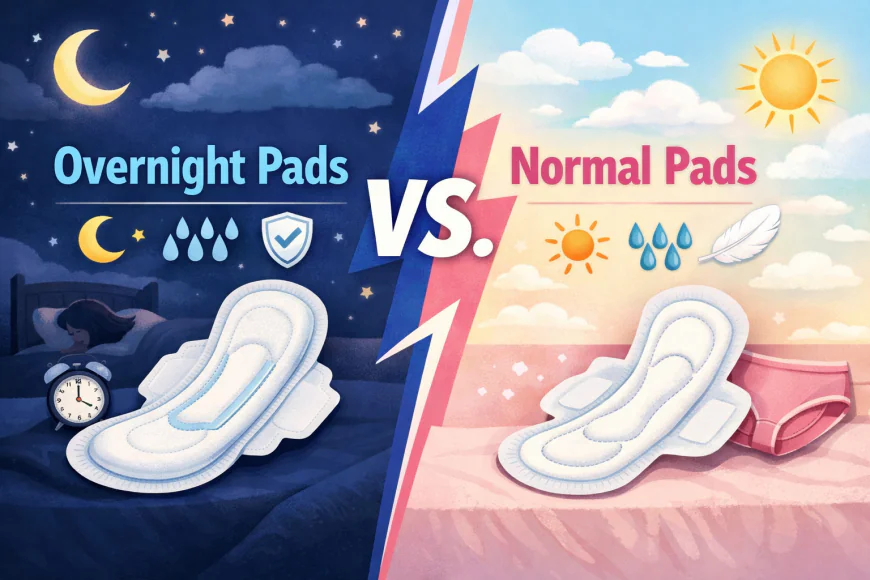
Introduction: The Midnight Leak Panic
Picture this: You're cozy in bed, deep in dreamland, when suddenly—jolt awake. That dreaded feeling. You know the one. You scramble to the bathroom, heart sinking, only to find your favorite pajamas have become a crime scene. We've all been there, right?
Here's the million-dollar question keeping women up at night (literally): Are overnight pads actually better than normal pads? Or is it just marketing genius making us buy another box of period products? Today, we're diving deep into this fluffy, absorbent debate. By the end, you'll know exactly what your body needs when the lights go out.
What Exactly Are Overnight Pads?
Think of overnight pads as the SUV of the period world. While normal pads are like your reliable sedan, overnight pads are built for the long haul—specifically, the 6-8 hours you're horizontal and helpless.
These pads are typically:
- Longer: Extended length covers from your front pelvic bone to way back, hugging your underwear's rear.
- Wider: Especially in the back, where nighttime leaks love to strike.
- More Absorbent: They pack extra layers to handle heavy flow over many hours.
- Strategically Shaped: Many feature a "baffle" or extra protection at the back.
Brands like Parwaz offer overnight thick pads made with 100% organic cotton. They promise being super absorbent, leak-proof, and free from toxic chemicals—so you're not just sleeping on a comfortable pad, but a healthier one too.
Normal Sanitary Pads: The Everyday Hero
Let's not forget our dependable everyday sanitary pads. These are designed for your active, upright life. Whether you're at your desk, at the gym, or running errands, normal pads are built for movement.
Their design focuses on:
- Discretion: Thinner profiles that disappear under clothes.
- Flexibility: They move with your body, bending and twisting as you do.
- Daytime Flow Management: Perfect for medium to light flow days when you're on the go.
But here's the thing—ask a normal pad to do overnight duty, and you're basically asking a city car to win a desert rally. It might survive, but the chances of a breakdown (read: leak) are pretty high.
Key Differences: Length, Absorption & Shape
Let's break down the nitty-gritty. Why can't you just use a normal pad and call it a night?
| Feature | Normal Pad | Overnight Pad |
|---|---|---|
| Length | Shorter (approx. 9-10 inches) | Longer (approx. 11-13+ inches) |
| Absorption | Moderate (for 3-4 hour changes) | High (for 6-8 hour changes) |
| Back Coverage | Minimal | Maximum (wider rear section) |
| Core Design | Slim, flexible | Thicker, more absorbent core |
| Best For | Daytime, light-medium flow | Nighttime, heavy flow, long hours |
It's like comparing a rain jacket to a full-on winter parka. Both keep you dry, but only one is built for a blizzard.
The Leak-Proof Test: Which One Wins at Night?
Okay, let's get real about leaks. When you're sleeping, gravity is your enemy. Fluid doesn't just fall down—it can travel backward, sideways, and even forward as you toss and turn.
Normal pads have a smaller "target zone." Roll over in your sleep while wearing one, and the blood might miss the pad entirely, traveling along the skin to your underwear's edge.
Overnight pads, however, are designed with this in mind. The extended length and wider back act like a safety net. Even if you're a champion sleeper who moves from fetal position to starfish, the pad's coverage area is huge. Many have leak-proof barriers along the sides too.
If you've ever woken up to a mess, switching to an overnight pad is like upgrading from a rowboat to a yacht. Suddenly, those rough nighttime seas don't seem so scary.
Comfort Check: Sleeping with a Pad
But is all that protection comfortable? Some women worry overnight pads feel like wearing a diaper to bed.
Honestly? It depends on the brand. Older-generation overnight pads were basically bulky mattresses. But modern options, like those from Parwaz, focus on combining thickness where needed with softness everywhere.
Think of it this way: you wouldn't sleep on a rock-hard mattress, right? You want support and softness. Quality overnight pads use soft cotton topsheets (like 100% organic cotton) that feel gentle against sensitive skin. The extra length might feel strange the first time, but once you realize you're leak-free, comfort takes on a whole new meaning—peace of mind is the ultimate comfort.
When Should You Use Overnight Pads During the Day?
Here's a pro tip: overnight pads aren't just for sleeping. They can be daytime lifesavers too!
Consider using an overnight pad during the day if:
- You have a super heavy flow: The first 1-2 days of your period can feel like a waterfall. An overnight pad means fewer bathroom trips.
- You're traveling: Stuck on a long flight or road trip without easy bathroom access? Overnight pads give you freedom.
- You're sick: When you're down with the flu, the last thing you want is to change pads every few hours.
- You're going to bed... for a nap: Hey, daytime naps deserve protection too!
So, your pack of overnight pads can pull double duty, making them a versatile addition to your period care kit.
Busting Myths: "Overnight Pads Are Too Bulky"
Let's tackle the elephant in the room. The biggest myth is that overnight pads are thick, crinkly, and obvious.
Myth Busted! Technology has come a long way. While they are thicker than ultra-thin daytime pads, they're not the clunky bricks of the past. Brands now use advanced absorbent gels and organic cotton cores that lock fluid away without puffing up like a balloon.
Yes, you might feel it more than a super-slim liner. But would you rather feel a slightly thicker pad, or feel the warm, panic-inducing trickle of a leak at 3 AM? For most of us, the choice is clear.
Making the Right Choice for Your Flow
So, how do you decide? Here’s your simple guide:
Stick with normal sanitary pads if:
- Your flow is light to medium.
- You're very active during the day and hate any extra bulk.
- You change your pad every 3-4 hours.
Switch to overnight pads if:
- You wake up with leaks (even occasionally).
- You have a heavy flow, especially on early days.
- You value uninterrupted sleep over frequent bathroom trips.
- You want extra protection for long days or travel.
Honestly? Most women need both in their arsenal. Use normal pads for daytime and the start/end of your period, and bring out the overnight pads when you want serious, worry-free protection.
Conclusion
So, back to our original question: Are overnight pads better than normal pads?
The answer isn't a simple yes or no—it's "better for what?" For daytime errands? Normal pads win for comfort and discretion. But for sleeping, long days, or heavy flow? Overnight pads are the undisputed champions.
They provide that fortress of protection that lets your brain shut off and your body truly rest. In a world where women already juggle a million things, shouldn't a good night's sleep be one less worry?
Investing in quality overnight pads , especially ones made with safe, organic materials, is an investment in your well-being. Because you deserve to sleep soundly, wake up fresh, and conquer your day—stain-free and stress-free. Sweet dreams!