
How to Choose a Cloud Contact Centre in the UAE Without Changing Your Numbers
 Voiger
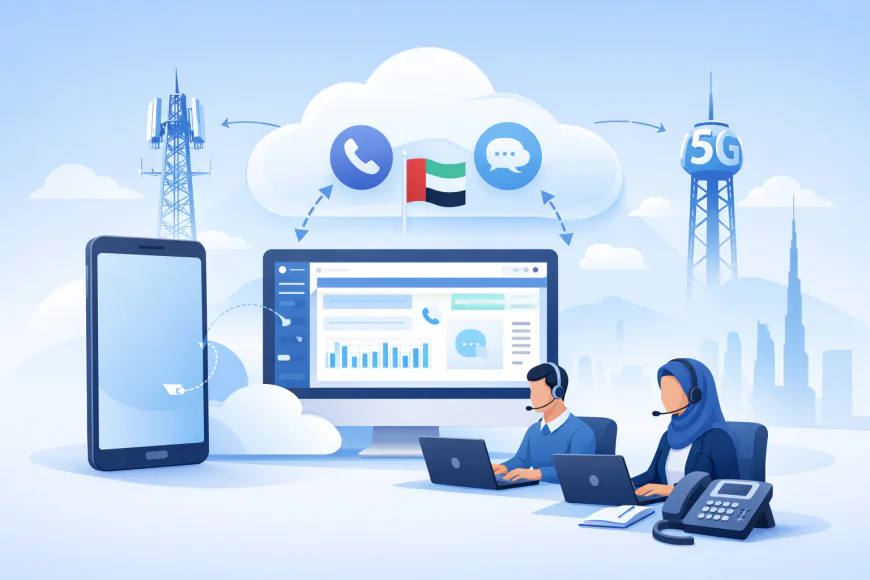
There is a conversation happening in boardrooms and operations teams across the UAE right now.
It usually sounds like this:
We need to upgrade our contact centre, but we cannot afford to lose our numbers.
It is a valid concern.
Your business phone number is already tied to your website, marketing campaigns, customer records, directory listings, and day-to-day operations. Changing it can create confusion, impact trust, and put valuable inbound calls at risk.
The good news is that moving to a modern cloud contact centre does not have to mean starting from scratch.
With the right platform, businesses can modernise how they manage voice, improve customer experience, and add automation without disrupting the numbers, carrier relationships, or workflows they already rely on.
If you are evaluating a cloud contact centre in the UAE, here is what you should look for before making the move.
Why More UAE Businesses Are Moving to Cloud Contact Centres
Traditional phone systems were built for a very different operating model. They were not designed for distributed teams, fast-growing businesses, or customer-facing operations that need better visibility across every interaction. They can be difficult to scale, expensive to maintain, and limited when it comes to reporting, flexibility, and automation.
A modern cloud contact centre gives businesses a more practical operating model:
-
Agents can work from anywhere using browser-based or mobile tools
-
Calls can be routed based on team, language, skills, or availability
-
Supervisors can monitor live queues, whisper coach, or step in when needed
-
Calls can be recorded, tagged, and reviewed for quality and compliance
-
AI can help automate routine customer interactions and post-call processes
For businesses in sales, support, healthcare, logistics, e-commerce, real estate, and financial services across the UAE, this is no longer a future upgrade. It is becoming the standard operating model for customer communication.
The Biggest Myth: Moving to the Cloud Means Changing Your Numbers
One of the main reasons businesses delay upgrading their voice operations is the assumption that a new platform automatically means changing business numbers, switching carriers, going through a long migration, and risking disruption during setup.
That is not the case if you choose the right platform.
A flexible cloud contact centre should help you modernise what happens around the call without forcing you to replace everything underneath it.
That is where BYOC, or Bring Your Own Carrier, becomes important.
What BYOC Actually Means for UAE Businesses
BYOC allows businesses to connect their existing carrier setup including Etisalat and du lines, or any SIP trunk directly to a modern cloud platform.
In practical terms, that means:
-
Your business keeps its existing numbers
-
Your carrier relationship remains in place
-
Your customers do not have to adapt to a new contact point
-
Your team gets a better platform on top of the existing voice layer
What changes is not your identity in the market. What changes is the operating layer around your calls routing logic, agent workspace, analytics, reporting, queue visibility, automation, and workflow management.
For growing UAE businesses, that is a far more practical path than a full rip-and-replace migration. With a BYOC setup already in place, businesses can often go live on a new platform in as little as five working days.
What to Look for in a Cloud Contact Centre in the UAE
When evaluating providers, it is easy to get distracted by feature lists. A better starting point is one question:
Can this platform fit into the way our business already operates, while giving us room to improve?
Here are the areas that matter most.
1. BYOC and Number Flexibility
For most UAE businesses, this should be a core requirement. A strong cloud contact centre must support flexibility around carrier connectivity and business numbers reducing migration friction while maintaining continuity for your customers and your brand.
Look for native integration with UAE carriers such as Etisalat and du, as well as the ability to add virtual numbers across 100+ countries as your operations grow.
2. Smart IVR and Call Routing Software
Customers do not want to bounce between teams or wait in the wrong queue. Look for a platform that supports intelligent call routing based on skills, business hours, language, queue rules, and department or service type. The right setup helps customers reach the right team faster while reducing pressure on your agents.
3. AI Voice Bot Capability
An AI voice bot is no longer just a future concept it is a practical operational layer for businesses that want to improve responsiveness and reduce repetitive call handling.
Depending on your use case, it can handle routine inbound queries, lead qualification, appointment booking, payment reminders, order status updates, and routing before agent handoff available 24 hours a day.
Importantly, choose a platform that gives your business flexibility here. Some teams want a native AI voice option ready to deploy. Others have already invested in their own bot or AI solution and simply need to connect it to their telephony infrastructure a model known as BYOB, or Bring Your Own Bot. That flexibility matters, and not every platform in the market offers it.
4. Post-Call AI Analytics
What happens after the call is as important as the call itself. Look for features such as call transcription, summaries, tagging, sentiment signals, quality scorecards, and agent performance insights.
These tools help managers coach teams more effectively, reduce manual review work, and surface patterns that are difficult to identify any other way.
5. CRM and Workflow Integration
Voice should not sit in isolation from the rest of your business. A modern platform should fit into the systems your teams already use whether that is CRM, customer support, ticketing, or internal workflows.
Look for integration with major platforms including Salesforce, Zoho, Freshdesk, Zendesk, Microsoft Dynamics, and Bitrix, as well as API access for any custom workflows your business depends on.
6. UAE Compliance and Data Residency
For regulated or data-sensitive industries financial services, healthcare, insurance this is non-negotiable. Your cloud contact centre provider must process and store data within the GCC region and operate within UAE TDRA compliance frameworks.
Routing your call data through servers in Europe or the US is not an acceptable risk in this regulatory environment. Always confirm where your data sits before signing.
7. Practical Onboarding and Local Support
Implementation experience matters more than most buyers realise. A provider may have strong features, but if setup is unclear, onboarding is slow, or support is handled by an overseas team unfamiliar with UAE telecom infrastructure, adoption becomes harder.
Look for a provider with 24/7 local UAE support a team that understands how Etisalat and du environments behave, what UAE compliance looks like in practice, and how to solve problems quickly when they arise. That is a different level of support to an overseas helpdesk.
Where AI Fits Without Overcomplicating Your Operations
There is a lot of noise in the market around AI. But most businesses do not need complexity they need practical improvements.
That may mean using AI to reduce missed opportunities after hours, handle repetitive inbound tasks, summarise calls automatically, reduce note-taking for agents, highlight conversation trends, improve quality reviews, or route calls more effectively.
The most sensible approach is usually phased. Start with stronger voice operations, better visibility, and cleaner routing. Then add AI where it creates immediate value for your team and your customers. That gives leadership more control over rollout, cost, and adoption.
What If You Do Not Have an Internal IT or Network Team?
This is a common situation for UAE SMBs and mid-market businesses. Not every company has internal networking or telephony expertise and that should not prevent them from modernising their customer communication.
Some platforms now offer Network as a Service (NaaS) a fully managed voice infrastructure layer where the provider handles your network setup, monitoring, on-site support, and ongoing management under a clear SLA. This gives lean teams access to enterprise-grade reliability without needing in-house technical resource to maintain it.
If your business does not have an IT team, it is worth asking prospective providers whether this kind of managed support is available.
A Smarter Way to Evaluate Vendors
If you are comparing cloud contact centre options in the UAE, ask every provider these five questions:
-
Can we keep our current numbers and existing carrier setup?
-
Can we connect our own AI bot if we already have one?
-
Can we start with core voice and add AI analytics later?
-
Where is our call data processed and stored?
-
What does implementation actually look like, and what local support do you provide?
These questions will tell you far more than a feature checklist. They will reveal whether a provider is offering a flexible, practical solution or a rigid platform that will require you to adapt your business around it.
The Bottom Line
Switching to a cloud contact centre in the UAE does not have to mean disruption.
With the right platform, businesses can keep their numbers, preserve continuity for customers, and move to a more capable operating layer that improves routing, visibility, compliance, and AI readiness.
The businesses moving fastest are not the ones with the biggest budgets. They are the ones choosing platforms that reduce friction, support real-world UAE operations, and give them room to modernise at their own pace.
That is what a modern voice platform should do.
Ready to See What a Low-Friction Setup Could Look Like?
Voiger is a UAE-built cloud contact centre starting from AED 299/month. BYOC and BYOB supported. Native Etisalat and du integration. In-region GCC data processing. TDRA-compliant infrastructure. AI voice bot and post-call analytics available as modular add-ons. 24/7 UAE local support. Go live in five days.
Book a free 30-minute demo → Visit voiger.io to explore the platform.
Frequently Asked Questions
Can I keep my number when switching to a cloud contact centre in the UAE?
In most cases, yes. With BYOC, your existing Etisalat or du numbers stay connected to the new platform nothing changes for your customers.
What is a cloud contact centre?
A browser-based platform that helps businesses manage inbound and outbound customer calls with tools including smart IVR, call routing, agent management, recording, CRM integration, and AI automation.
What does BYOC mean?
Bring Your Own Carrier you connect your existing carrier or SIP environment to the cloud platform instead of replacing it.
What does BYOB mean?
Bring Your Own Bot you connect your existing AI voice solution to the platform rather than being forced to use a proprietary one.
How can an AI voice bot help my business?
It handles routine calls automatically answering queries, qualifying leads, booking appointments, and sending reminders 24 hours a day, without agent involvement.
What is post-call AI analytics?
Transcripts, summaries, sentiment signals, auto-tagging, and quality scorecards that help teams review conversations and improve performance without manual effort.
What if I do not have an IT team?
Look for a provider offering Network as a Service (NaaS) a managed infrastructure layer where the provider handles your network setup and ongoing support under an SLA.
Is my call data safe with a UAE cloud contact centre?
With a compliant provider, yes. Confirm that your data is processed and stored within the GCC region and that the platform operates within UAE TDRA regulatory frameworks.
How long does setup take?
With a BYOC configuration already in place, as little as five working days including call flow setup, IVR configuration, agent onboarding, and CRM integration.
How do I get started with Voiger?
Book a 30-minute demo at calendly.com/ankit-voiger/30min or visit voiger.io.