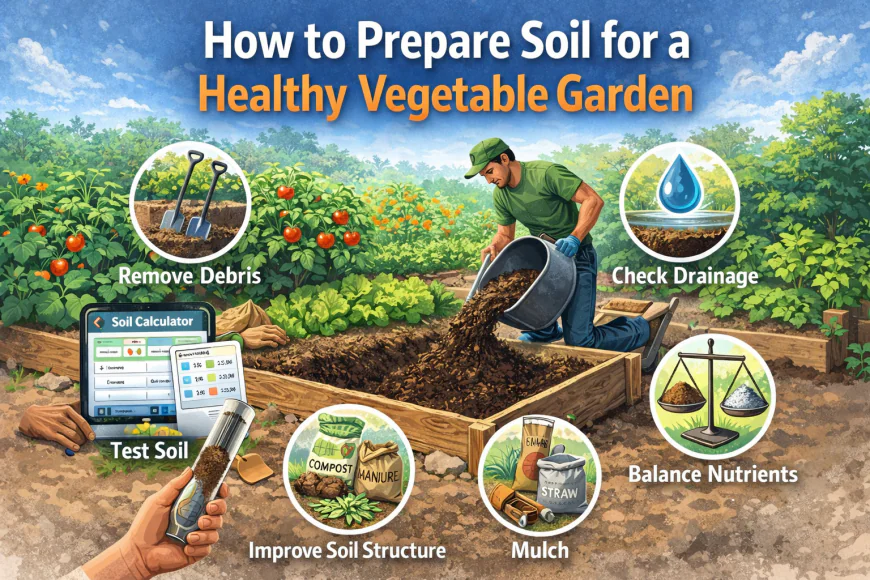
Healthy vegetables rarely start with seeds alone. They begin with soil. When soil is balanced, loose, and rich in organic matter, plants develop stronger roots, absorb nutrients efficiently, and resist stress better.
Yet many home gardeners overlook one practical step before planting: measuring the soil volume and amendments needed. Before you start mixing compost or fertilizers, it helps to estimate the correct amount. A simple soil calculator can quickly determine how much soil or compost your beds require. This prevents overfilling beds or wasting materials, especially in raised garden setups.
If you’ve noticed vegetables growing slowly, producing small harvests, or showing yellow leaves, poor soil preparation is often the hidden cause. Let’s walk through how experienced gardeners prepare soil so plants thrive through the growing season.
Understand What Makes Soil “Healthy”
Healthy soil isn’t just dirt. It’s a living system made of minerals, organic matter, microorganisms, water, and air.
According to research published by the USDA Natural Resources Conservation Service, productive agricultural soil typically contains:
That small 5% organic matter drives most soil fertility. It feeds microbes, improves structure, and helps retain nutrients.
In real garden beds, however, organic matter often drops below 2%. When that happens, soil becomes compacted and nutrients wash away quickly.
So the goal of soil preparation is simple: rebuild that balance.
Test the Soil Before You Change It
A common mistake gardeners make is adding fertilizers without knowing what the soil actually needs.
If you’ve ever added nitrogen fertilizer expecting lush growth but ended up with weak plants, the soil may already have had enough nitrogen while lacking phosphorus or potassium.
A soil test removes guesswork.
Basic tests measure:
-
pH level
-
Nitrogen (N)
-
Phosphorus (P)
-
Potassium (K)
-
Organic matter content
Vegetables generally grow best when soil pH sits between 6.0 and 7.0. Outside that range, plants struggle to absorb nutrients even if they’re present.
For example:
Many local agriculture extensions provide low-cost soil testing. It’s one of the smartest investments a gardener can make.
Remove Debris and Old Roots
Before improving soil, clear the planting area completely.
Old roots, rocks, and construction debris interfere with root growth and water flow. I’ve seen raised beds filled with leftover brick pieces where tomatoes never developed deep roots.
Even thick weed roots can create long-term problems. If they remain in soil, they often regrow once watering begins.
Take time to remove:
This step may feel tedious, but it prevents issues later in the growing season.
Improve Soil Structure
Soil structure determines how easily roots move through the ground.
Compacted soil behaves like a brick after rain. Water sits on the surface, roots stay shallow, and plants suffer during dry periods.
Good soil should feel crumbly and loose.
For Clay Soil
Clay soil holds nutrients well but drains poorly. When wet, it becomes sticky. When dry, it hardens.
Add:
-
Compost
-
Aged manure
-
Leaf mold
These materials create spaces between clay particles and improve drainage.
For Sandy Soil
Sandy soil drains quickly but struggles to retain nutrients.
Add:
These additions increase water retention and nutrient storage.
Add Organic Matter Generously
Organic matter is the backbone of fertile soil.
A long-term study from Rodale Institute found that soils rich in organic matter improved water retention by up to 20,000 gallons per acre. That means gardens need less irrigation during hot weather.
For vegetable gardens, aim to mix 2–3 inches of compost into the top 6–8 inches of soil.
Common organic amendments include:
-
Compost
-
Aged manure
-
Leaf mold
-
Worm castings
-
Mushroom compost
Each adds slightly different nutrients and microbial life.
If you’ve ever noticed how plants explode with growth in compost-rich beds, microbes are doing most of the work behind the scenes.
Check Drainage Before Planting
Drainage problems can ruin even the best soil mix.
Here’s a simple test gardeners often use.
-
Dig a hole about 12 inches deep.
-
Fill it with water.
-
Let it drain and refill it again.
If the water takes more than 4 hours to drain completely, the soil likely has poor drainage.
In those situations, raised beds or additional organic matter can improve conditions.
Vegetables like tomatoes, peppers, and cucumbers hate sitting in soggy soil. Their roots need oxygen just as much as they need water.
Balance Nutrients Naturally
Once structure improves, nutrients can be adjusted.
Rather than relying heavily on synthetic fertilizers, many experienced gardeners combine natural sources.
Examples include:
The key is moderation. Too much fertilizer encourages leafy growth but reduces fruit production.
In real gardens, I’ve seen tomato plants grow six feet tall with few tomatoes simply because nitrogen levels were excessive.
Balanced soil supports both plant growth and fruit development.
Avoid Over-Tilling the Soil
Tilling can loosen soil initially, but too much disturbance damages soil biology.
Earthworms, fungi, and beneficial bacteria create natural channels that help water and air move through the soil. Heavy tilling breaks those networks.
Instead of deep tilling every season, many gardeners prefer shallow cultivation combined with compost additions.
This approach protects soil life and gradually improves structure over time.
Prepare Beds a Few Weeks Before Planting
Timing matters more than many people realize.
Fresh compost and amendments need time to integrate with soil. Microorganisms begin breaking down materials and releasing nutrients.
Ideally, prepare soil 2–3 weeks before planting.
That waiting period allows soil biology to stabilize so young seedlings don’t face nutrient shocks.
Mulch After Planting
Once vegetables are in the ground, mulch becomes the final step in soil protection.
Mulch helps:
-
Retain moisture
-
Reduce weeds
-
Prevent erosion
-
Feed soil organisms
Straw, shredded leaves, and grass clippings work well in vegetable gardens.
Mulching also reduces soil temperature swings, which keeps root systems healthier.
Final Thoughts
Preparing soil isn’t glamorous work, but it determines the success of a vegetable garden more than any other factor.
When soil contains enough organic matter, drains properly, and maintains balanced nutrients, plants respond quickly. Growth becomes stronger, pest resistance improves, and harvests increase.
In practical terms, healthy soil means less fertilizer, less watering, and fewer plant problems.
If you take the time to prepare the soil properly before planting, the garden often takes care of the rest.



 meh.riztech