
Role of AGL Systems in Airport Safety Management
An airport is a place of immense controlled energy. Multi-ton aircraft accelerate to hundreds of miles per hour, land in adverse weather, and navigate complex ground routes just feet from one another.
 kubricks
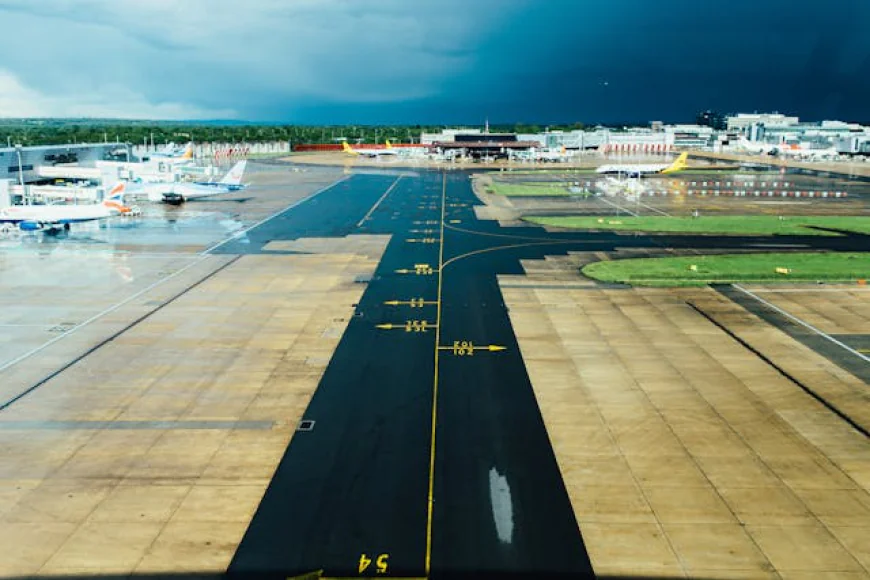
In this high-stakes environment, there is no room for ambiguity. Every signal, instruction, and piece of infrastructure must be clear, reliable, and universally understood. Safety is not just a priority; it is the fundamental principle upon which the entire global aviation network is built.
While advanced radar and communication technologies manage aircraft in the sky, the final, most critical phases of flight—landing and ground movement—rely heavily on a more fundamental tool: the pilot's vision. To make this possible in darkness, fog, or rain, airports depend on a sophisticated network of visual aids. These are known as airfield ground lighting systems (AGL), and their role in preventing accidents is indispensable.
The design, implementation, and maintenance of this critical infrastructure are a core function of airport engineering. This discipline blends civil, electrical, and systems engineering to create a robust, fault-tolerant environment that guides pilots safely from the sky to the stand. It's about more than just placing lights; it's about creating a language of light that communicates precise, life-saving information.
A modern airport’s Safety Management System (SMS) is a formal, top-down approach to managing safety risk. Within this framework, AGL systems are not just operational assets but are foundational safety-critical equipment. Their proper function directly mitigates some of the greatest risks in aviation. Let's explore exactly how these lights serve as a first line of defense in airport safety.
Preventing Runway Incursions
One of the most serious and persistent risks at any airport is a runway incursion. This occurs when an aircraft, vehicle, or person improperly enters the protected area of a runway designated for takeoffs and landings. The consequences can be catastrophic.
How AGL Systems Mitigate the Risk:
- Runway Status Lights (RWSL): This is one of the most significant safety advancements in AGL. It is a fully automated system that uses an airport's surface surveillance radar to detect traffic. It controls two sets of embedded red lights:
-
- Runway Entrance Lights (RELs): A line of red lights at a taxiway intersection warns pilots that it is unsafe to enter the runway because another aircraft is either taking off, landing, or crossing that point.
- Takeoff Hold Lights (THLs): A double row of red lights facing a plane in takeoff position illuminates if the runway ahead is occupied by another aircraft or vehicle.
- Stop Bars: In low-visibility conditions, air traffic controllers activate rows of red in-pavement lights at runway holding positions. A pilot is forbidden from crossing a lit stop bar, even if they have verbal clearance. This provides an undeniable visual "stop sign" that is physically interlocked with control tower commands, adding a crucial layer of redundancy.
Ensuring Safe Landings in Low Visibility
Landing an aircraft requires precise alignment with the runway, both laterally and vertically. As weather deteriorates, a pilot's ability to judge this visually disappears. AGL systems are designed to provide an artificial visual environment that allows pilots to land safely even when they can't see the natural horizon.
Key Lighting Components for Safe Approaches:
- Approach Lighting System (ALS): This is a series of high-intensity light bars and strobing lights extending up to 3,000 feet from the runway threshold. It acts as a funnel, guiding the pilot's eyes to the runway centerline and helping them transition from instrument flight to visual flight.
- Precision Approach Path Indicator (PAPI): This system consists of four lights adjacent to the runway that project red and white light. The combination of colors seen by the pilot provides a simple, intuitive indication of their vertical position. "Two white, two red" means they are on the correct glideslope. "All red, you're dead" and "all white, you're high as a kite" are common mnemonics.
- Runway Edge, Centerline, and Touchdown Zone Lights: Once over the runway, a dense pattern of lights confirms the aircraft's position. Centerline lights keep the plane straight, while touchdown zone lights mark the ideal landing area, helping to prevent long or short landings that could lead to overruns.
Averting Ground Navigation Errors
Once an aircraft lands, the journey is not over. It must navigate a maze of taxiways to reach the gate. In large, complex airports, especially at night or in poor weather, pilots can easily make a wrong turn, leading to delays or dangerous conflicts with other aircraft.
How AGL Systems Improve Ground Navigation:
- Color Coding: The simple, standardized color scheme is a primary safety feature. Blue lights universally mark the edges of taxiways, while green lights indicate the centerline. This prevents a pilot from mistaking a taxiway for a runway (which is outlined in white).
- "Follow-the-Greens" Guidance: Modern, advanced systems integrate with the airport's surface management software. Instead of giving complex verbal instructions, air traffic control can illuminate a specific path of green centerline lights for a particular aircraft. The pilot simply follows the lit path to their destination, while red stop bars block off conflicting routes. This dramatically reduces the chance of human error in navigation.
Enhancing Situational Awareness
A core tenet of aviation safety is situational awareness—knowing where you are, where other traffic is, and what is happening around you. AGL systems are designed to constantly feed this awareness to pilots.
For example, the intensity of the lighting itself is a safety tool. Air traffic controllers can adjust the brightness of the entire system based on conditions. On a clear night, the lights are dimmed to prevent glare. In dense fog, they are turned up to maximum intensity to provide the best possible chance of being seen. This adaptability ensures the system is always providing useful, not distracting, information.
Furthermore, the consistency of AGL patterns worldwide is a critical safety feature. A pilot trained in one country can fly into any major airport on another continent and instantly understand the language of the lights, reducing cognitive load during a high-stress phase of flight.
Conclusion: The Unseen Guardian
The role of airfield ground lighting in airport safety management cannot be overstated. It is an active, dynamic system that prevents collisions, guides pilots through uncertainty, and provides an essential layer of redundancy to verbal communication. From the automated logic of runway status lights to the simple color code of a taxiway, every component is engineered for reliability and clarity.
While passengers may only notice these lights as a fleeting, beautiful pattern on approach, they are the silent guardians of the tarmac. They are a testament to an industry where safety is engineered into the very foundation of operations, ensuring that every journey, day or night, ends on a clearly illuminated path to safety.