Spot Welder for Aluminum: Advanced Solutions for Modern Manufacturing
Choosing the right spot welder for aluminum is critical for ensuring strong, consistent, and reliable welds.
 harry45
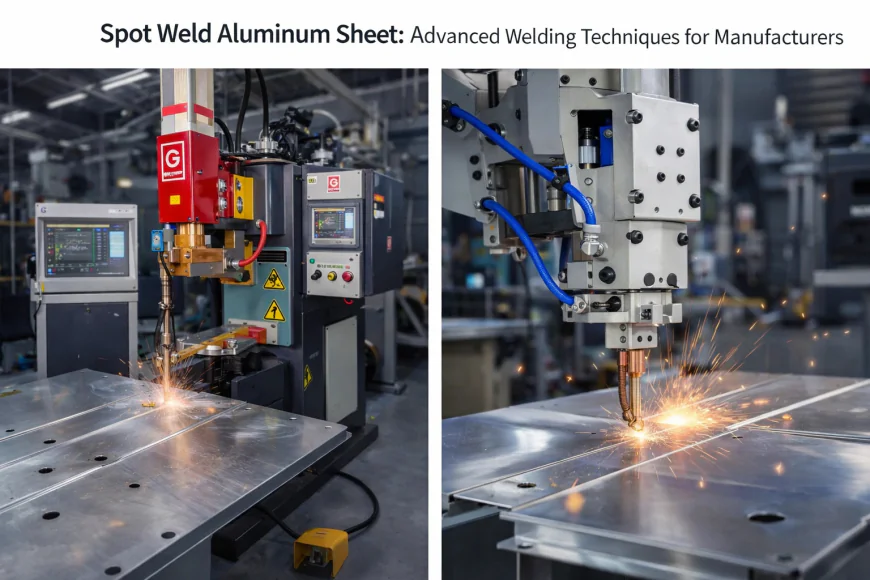
Aluminum is a lightweight, high-strength metal widely used across automotive, aerospace, electronics, and consumer goods industries. However, welding aluminum presents unique challenges due to its high thermal conductivity, oxide layer, and susceptibility to distortion. Choosing the right spot welder for aluminum is critical for ensuring strong, consistent, and reliable welds.
As a global manufacturer of industrial welding and metal-joining equipment, Heron Welder provides state-of-the-art resistance welding solutions tailored for aluminum applications, from standalone spot welders to fully automated production lines.
Understanding Aluminum Spot Welding
Spot welding is a type of resistance welding where an electric current passes through the metal sheets to heat and fuse them at localized points. Aluminum requires specialized considerations:
-
High Thermal Conductivity: Aluminum dissipates heat quickly, demanding higher current or longer weld times.
-
Oxide Layer: The natural aluminum oxide layer can prevent proper fusion if not adequately penetrated.
-
Sheet Thickness Variations: Aluminum sheets often vary in thickness, requiring adaptive weld control to avoid weak joints or burn-through.
Heron’s spot welders for aluminum are engineered to manage these challenges, ensuring precise heat control, consistent weld quality, and minimal distortion.
Applications of Spot Welding Aluminum
Spot welding aluminum is essential in industries where lightweight and strong joints are required. Common applications include:
-
Automotive Manufacturing: Aluminum body panels, chassis components, and battery enclosures.
-
Aerospace Components: Lightweight fuselage sections, brackets, and assemblies.
-
Consumer Electronics: Aluminum casings and internal structural frames.
-
HVAC and Appliances: Aluminum ducts, housings, and structural supports.
By using Heron’s spot welders, manufacturers can achieve high productivity and repeatable welds even in high-volume automated environments.
Key Features of a Spot Welder for Aluminum
Choosing the right equipment requires understanding the features that make a spot welder ideal for aluminum:
-
MFDC or Capacitor Discharge Technology
Medium-Frequency Direct Current (MFDC) welders and capacitor discharge spot welders provide precise control over current, pulse duration, and heat input, making them suitable for aluminum’s high conductivity. -
Adaptive Weld Control
Advanced controllers monitor electrode force, current, and sheet thickness, adjusting parameters in real-time to prevent defects. -
Electrode Design & Cooling
Aluminum requires specially designed copper alloy electrodes with effective water cooling to maintain consistency and reduce wear. -
Automation Integration
Heron spot welders can be seamlessly integrated into robotic production lines, enabling fully automated welding with repeatable accuracy for high-volume manufacturing.
Spot Welding Aluminum vs. Steel: What’s Different?
While the principle of resistance welding is similar, aluminum behaves differently compared to steel:
| Feature | Aluminum | Steel |
|---|---|---|
| Thermal Conductivity | High – heat dissipates quickly | Low – retains heat longer |
| Weld Current | Higher currents required | Lower currents sufficient |
| Weld Time | Shorter or pulsed to prevent burn-through | Standard weld times |
| Oxide Layer | Must penetrate dense oxide layer | Minimal effect |
Understanding these differences is crucial for engineers and production managers when specifying welders, electrodes, and control parameters.
Best Practices for Aluminum Spot Welding
To ensure high-quality welds and long electrode life, consider the following:
-
Pre-cleaning Surfaces: Remove grease and contaminants to improve weld consistency.
-
Correct Electrode Selection: Use copper alloys with optimal hardness and cooling design.
-
Monitor Weld Parameters: Track current, force, and pulse duration to maintain quality.
-
Regular Maintenance: Inspect electrodes, cables, and cooling systems to prevent downtime.
-
Test Welds: Perform destructive and non-destructive testing to verify weld strength.
Heron provides both expert guidance and equipment capable of implementing these best practices efficiently.
Why Choose Heron for Aluminum Spot Welding
Heron Welder is a trusted partner for manufacturers seeking reliable and high-performance welding solutions:
-
Global Expertise: Serving OEMs, automation integrators, and industrial manufacturers worldwide.
-
Advanced Technology: MFDC, capacitor discharge, and servo-controlled spot welders designed for aluminum.
-
Automation Support: Fully integrable systems for robotic and automated production lines.
-
Customization: Tailored solutions for specific thicknesses, geometries, and production volumes.
Heron’s commitment to precision, efficiency, and long-term reliability makes it the go-to provider for aluminum welding challenges.
FAQs About Spot Welding Aluminum
Q1: Can standard steel spot welders be used for aluminum?
A1: No. Aluminum’s higher thermal conductivity and oxide layer require specialized MFDC or capacitor discharge spot welders with precise control.
Q2: What thickness of aluminum can be spot welded?
A2: Typically, sheets from 0.5 mm to 3 mm can be spot welded, but parameters may vary depending on alloy and application.
Q3: How often should electrodes be replaced?
A3: Electrode wear depends on sheet thickness and weld volume, but regular inspection and maintenance are recommended to ensure quality.
Q4: Is automation necessary for aluminum spot welding?
A4: While manual welders can be used, automation ensures consistent quality, reduces operator error, and increases throughput in high-volume production.
Q5: Can Heron spot welders be integrated with robotic arms?
A5: Yes. Heron welders are designed for seamless integration with industrial robots, enabling fully automated production.
Conclusion
Welding aluminum presents unique challenges, but with the right spot welder for aluminum, manufacturers can achieve strong, precise, and consistent joints. Heron Welder’s advanced resistance welding technology, expert support, and automation-ready systems empower factories to maximize efficiency, quality, and reliability.
For customized aluminum welding solutions and production line integration, contact Heron Welder today to request a quote or consult with our specialists for your next project.