
Winter Skin Care Guide Pakistan: How to Stop Dry Skin, Cracked Heels & Chapped Lips
Dry, itchy winter skin? A dermatologist-backed guide for Pakistan: the right moisturiser, cracked-heel fixes, lip care, and the mistakes making it worse.
 MuseBrandly
Every winter, the same complaints start making the rounds in Pakistani homes. Hands that feel like sandpaper by evening. Heels cracking no matter how much lotion gets rubbed in. Lips that split the moment you step outside. And the standard response, a dab of whatever cream is closest, barely makes it to lunch.
Most winter skin care fails for a simple reason: people do the right things in the wrong order, with the wrong products. A thin lotion after a long hot shower. Sunscreen packed away with the summer clothes. Heels treated only when they start hurting. This winter skin care guide for Pakistan fixes the sequence. It follows what dermatologists actually recommend, not brand slogans, and it is written for how winter really behaves here, from Karachi's mild chill to a January in Murree.
The short version
In a hurry? Here is the whole guide in seven lines:
- Winter dries your skin because cold air steals its water. Cold air holds less moisture, so it pulls water straight out of your skin. Room heaters make indoor air even drier.
- Moisturise twice a day, on damp skin. Right after a shower or face wash, while the skin is still slightly wet. That is when a moisturiser can actually lock water in.
- Cream beats lotion in winter. Lotions are mostly water; creams and ointments carry the heavier ingredients that seal moisture in. If your skin is dry, upgrade the texture, not just the brand.
- Short, lukewarm showers. Five to ten minutes. Long hot showers strip the natural oils your skin needs most in winter.
- Cracked heels have a real protocol: urea cream after bathing, plain petroleum jelly with socks at night. It works. It is what dermatologists recommend.
- Keep the sunscreen. UV does not take a winter break; UVA passes through clouds and windows all year. SPF 30, broad-spectrum, every morning.
- Hands, feet, and lips need their own products. Your face cream is not enough for heels, and your body lotion is not enough for lips.
Now the detail behind each one.
Why your skin gets dry in winter
Your skin's outermost layer, which dermatologists call the stratum corneum, works like a seal. When it is healthy, it holds water inside your skin. In winter, two things attack that seal.
First, cold air is thirsty air. Cold air physically holds less moisture than warm air, so dry winter air acts like a sponge pressed against your face, pulling water out through the skin. Dermatologists have a name for this: trans-epidermal water loss, or TEWL. It happens all the time, but in winter it speeds up.
Second, we make it worse indoors. Room heaters warm the air but strip what little humidity it has, so heated indoor air can actually be harsher on your skin than the cold outside. If you sleep with a gas heater running, your bedroom holds the driest air you breathe all day. A small humidifier, or even a bowl of water set near the heater, puts some of that moisture back. Add long hot showers, which wash away the natural oils that form part of the seal, and you have the full recipe: tight, itchy, flaky skin that no amount of occasional lotion fixes.
Understanding this changes the strategy. You are not just "adding moisture". You are repairing a seal and then protecting it. Everything below follows from that.
The winter routine, step by step
You do not need twelve products. You need the right few, in the right order.
1. Wash gently, and less aggressively. Your summer face wash, especially a strong foaming one, is probably too harsh for winter. Switch to a gentle, fragrance-free cleanser. It cleans without stripping the oils your skin is already short on. Same logic for the body: you do not need a harsh soap everywhere, every day.
2. Moisturise on damp skin, within minutes. This is the single highest-value habit in this guide. After a shower or face wash, pat, don't rub, your skin with a towel, then apply moisturiser while it is still slightly damp. The cream traps that surface water instead of letting it evaporate. Dermatologists say to do this within about five minutes of bathing. Miss that window and you are moisturising dry skin, which is far less effective.
3. Upgrade to a cream. If you have been using a light lotion all year, winter is when it stops being enough. Lotions have higher water content and less of the sealing ingredients. A cream or ointment-type moisturiser does the actual work of preventing water loss. Twice a day is the baseline, morning and night, plus after every handwash if your hands crack.
4. Give your body the same treatment. Legs, arms, elbows: they itch in winter for the same reason your face gets tight. A body lotion or cream after your shower, same damp-skin rule. People skip this because it feels like a chore; it is the difference between comfortable skin and scratching through January.
5. Hands and feet get their own step. More below. They need heavier treatment than the rest of you.
6. Lips get balm, not licking. More below too.
7. Sunscreen, every morning. Yes, in winter. See the section below. This is the habit most Pakistanis drop, and it is a mistake.
One more for commuters: if you ride a bike to work, your face takes the winter wind full on. A scarf or muffler over the lower face is not just warmth. It cuts the wind that strips moisture out of your skin.
What to read on the label
You do not need to memorise chemistry. Just know which words matter in winter:
- Ceramides, hyaluronic acid, glycerin, shea butter: the workhorses. They either pull water into the skin or seal it in. If your moisturiser lists a few of these near the top of the ingredients, it is built for the job.
- Urea (10–25%): the specialist for thick, rough skin, especially heels. Dermatologists specifically recommend this range for cracked heels. Fair warning from the same guidance: it can sting on skin that is already cracked open, so start it on rough-but-intact skin.
- Petroleum jelly: the cheapest, most effective sealant there is. It does not add water; it stops water leaving. That is exactly what you want as a night-time top layer on heels and very dry patches.
- Fragrance-free: winter skin is sensitised skin. Fragrance is one of the most common irritants, and a "fresh scent" moisturiser can quietly make dryness worse. If your skin stings when you apply product, fragrance is a suspect.
What to skip: anything with high alcohol content (it evaporates and takes your moisture with it), and harsh scrubs on already-dry skin. Exfoliation has its place, but grinding a rough scrub into winter-flaky skin usually backfires.
Cracked heels: the nightly fix that actually works
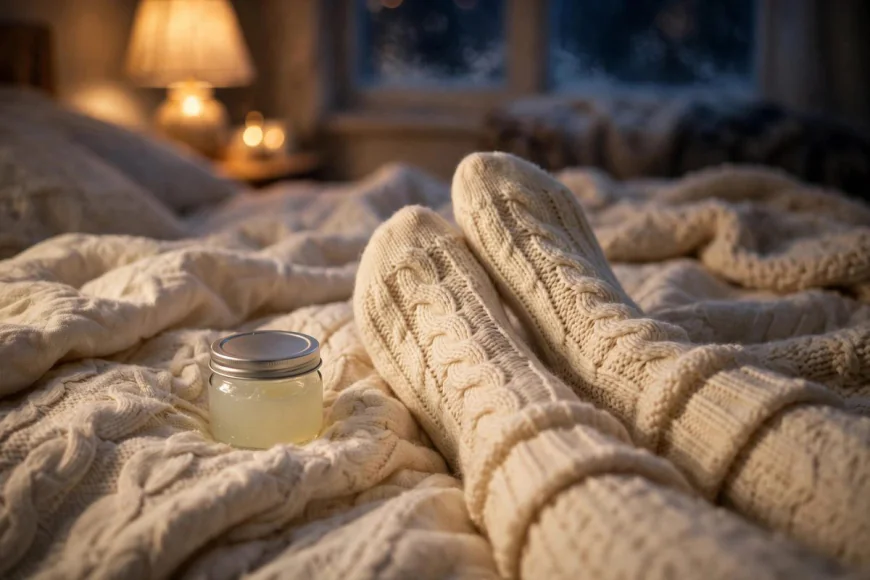
Heels crack in winter for a simple reason: the skin there is thick, has few oil glands, and takes a beating from dry air, bare feet at home, and hot shower water. Here is the protocol dermatologists recommend. It works if you do it nightly, not once a month:
- Keep showers short. Five to ten minutes, lukewarm. Long hot showers are heel enemy number one.
- Use a gentle, fragrance-free cleanser on your feet. It helps them keep their natural oils.
- Moisturise within five minutes of bathing, while feet are still damp, with a cream containing urea (10–25%), alpha hydroxy acid, or salicylic acid. Reapply whenever heels feel dry during the day.
- At night: plain petroleum jelly, then socks. This is the step people skip and the step that matters most. The jelly seals everything in; the socks keep it on your feet instead of your bedsheets.
- During the day, a liquid bandage over actual cracks protects them, eases the pain, and keeps germs out.
One worked example from Brandly's own shelves: the GlutaWhite Whitening Cream for Hands & Feet (100ml) at PKR 969, a hand-and-foot cream (brand Blush Vault) built for exactly this job: daily moisturising of hands and feet, non-greasy, fast-absorbing. Run it against the checks: it is a cream rather than a thin lotion, it is made for hands and feet specifically, and it is meant for daily use. (We make no claims about its brightening promises. That is the brand's wording, not something this guide tested. What matters for winter is that it is a proper hand-and-foot cream at an honest price.) Browse it here: GlutaWhite Whitening Cream for Hands & Feet (100ml)
And a note the dermatologists add: if your cracked heels are severe, bleeding, or do not improve after a few weeks of this routine, see a doctor. Sometimes cracked heels signal something underlying, like diabetes. Do not just keep adding cream.
Chapped lips: what actually helps
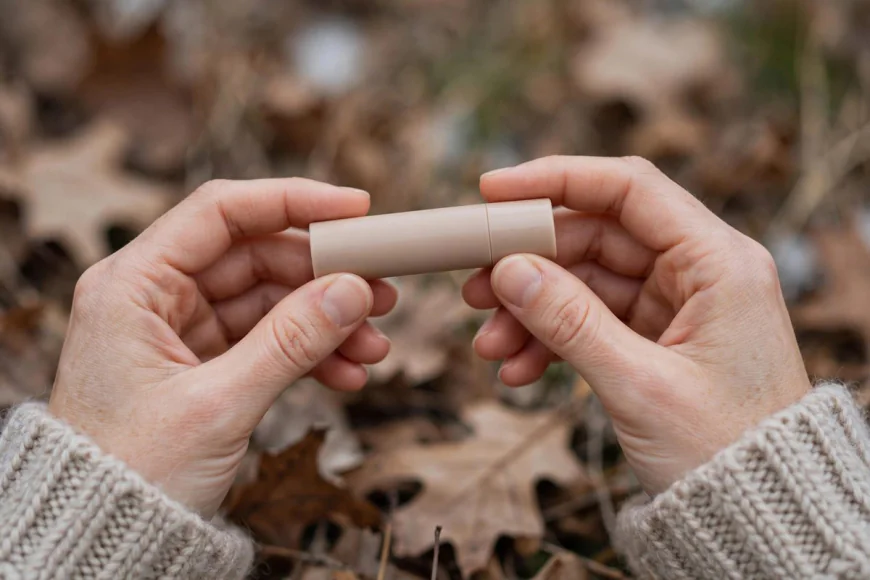
Lips chap faster than the rest of your face because the skin there is thin and has almost no oil glands of its own. In winter air, they are defenceless. The fix is boring and effective:
- Use a lip balm and reapply through the day. Keep one where you will actually use it: pocket, bag, desk.
- Pick one with SPF. Lips burn too, and almost nobody sunscreens their lips. An SPF lip balm covers both problems at once.
- Stop licking them. It feels like relief for about ten seconds; saliva evaporates and leaves lips drier than before. This is the hardest habit and the most worth breaking.
- At night, a dab of petroleum jelly on the lips does the same sealing job it does on heels.
If your lips are cracked at the corners specifically and it will not heal, that is worth a pharmacist's or doctor's look. It can be a mild infection, not just dryness.
Sunscreen in winter: yes, really
This is the section most readers will argue with, so let's be direct: UV radiation does not care that it is cold. The burning rays (UVB) ease off in winter, but UVA, the rays behind premature ageing, pigmentation, and skin cancer, stay roughly constant all year. They pass through clouds. They pass through window glass. A grey January day in Lahore is still giving your face UV.
The American Academy of Dermatology's guidance is year-round: broad-spectrum, SPF 30 or higher, on exposed skin (face, neck, hands), every morning. In winter, a moisturising sunscreen pulls double duty: protection plus the sealing your skin needs anyway. If you drive, note that UVA comes through the windshield too.
The one exception worth thinking about: if you spend your days entirely indoors away from windows, the urgency drops. For everyone else, commuters, shoppers, anyone who steps outside, it is a daily habit, not a summer one.
Mistakes Pakistani shoppers make
- The long hot shower. It feels wonderful and it is the single most damaging daily habit for winter skin. Lukewarm, five to ten minutes, then moisturise damp. Everything else is secondary.
- Packing away the sunscreen. Covered above. Winter sun still ages your skin.
- Thin lotion instead of cream. If your "moisturiser" pours like milk, it is not going to hold up in January. Texture matters more than brand.
- Forgetting hands and feet. People moisturise their face and wonder why their hands look ten years older by February. Hands get washed constantly, and every wash strips them. Feet get ignored until they crack.
- Fragranced everything. That "fresh" body lotion might be the reason your skin stings. In winter, fragrance-free is the safe default for sensitive or very dry skin.
- Waiting until it is bad. Winter skin care is maintenance, not rescue. Starting the routine in October beats trying to repair cracked heels in January.
Where to shop for winter skin care on Brandly
Once you know what to look for, browse with this guide open. Brandly's beauty shelves carry the categories this routine needs:
- Moisturisers & Creams: the core of the whole routine.
- Body Lotions & Creams: for the full-body step.
- Hand Creams: because hands need their own.
- Lip Care: balms and treatments.
And the worked example from the heels section: GlutaWhite hand & feet cream (PKR 969).
Whatever you buy: check the label for the ingredients in the label section, prefer fragrance-free if your skin is sensitive, and remember the routine matters more than any single product. The best cream in the world will not help if it is applied to dry skin after a twenty-minute hot shower.
When to see a dermatologist
Most winter dryness surrenders to the routine above within a couple of weeks. See a dermatologist if: the dryness or itching does not improve after a few weeks of proper moisturising; itching keeps you up at night; cracks bleed, ooze, or look infected; or you develop red, scaly, thickened patches that could be eczema or psoriasis. That is not a failure of the routine. It is a sign something else is going on, and prescription options exist for exactly that.
Sources: American Academy of Dermatology guidance, Harvard Health, Baylor College of Medicine, Columbia University Irving Medical Center, and Wayne State University dermatology Q&A. Store links and the GlutaWhite price (PKR 969) verified live on brandly.pk on 2026-10-16; the Lip Care category page loads but currently lists no products.