How to Design Homes with Maximum Natural Light & Ventilation
Learn how to design homes with maximum natural light & ventilation. Expert home interior design & apartment interior design tips from Space Manager Dehradun.
 spacemanager
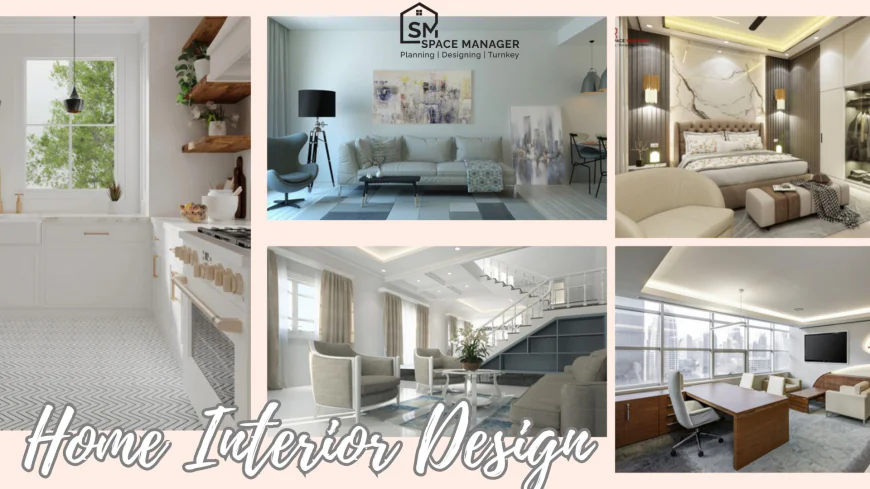
There is a certain quality that the best homes share — an effortless brightness, a freshness in the air, a sense of connection to the outside world that makes spending time indoors feel genuinely restorative rather than confining. It is not accidental. It is not luck. It is the result of deliberate home interior design decisions made at the right stage of a project — decisions that prioritise natural light and ventilation as foundational elements rather than afterthoughts.
In India, there is an abundance of sunlight, and therefore, there are significant cultural and climatic reasons to create designs that take advantage of natural light and natural ventilation. Homes that effectively use these elements will generally be more desirable places for the occupants to live since they will generally provide more thermal comfort, more energy efficiency, and a healthier environment for their occupants and in every case will be more visually appealing than those that do not.
Here is how to get it right.
Why Natural Light and Ventilation Matter More Than Most Homeowners Realise
Before getting into the how, it is worth understanding the full significance of the why. Natural light and ventilation affect a home in ways that go well beyond aesthetics.
Health and wellbeing. Natural light regulates circadian rhythms, supports vitamin D synthesis, improves mood, and reduces fatigue. Poor ventilation, conversely, accumulates indoor air pollutants at levels that consistently exceed outdoor concentrations in sealed, mechanically conditioned homes. These are not minor considerations — they affect how your family feels every single day.
Energy performance. A home designed to maximise natural light reduces dependence on artificial lighting across daylight hours. A home designed for natural ventilation reduces mechanical cooling loads significantly — particularly relevant in Dehradun's climate, where cross-ventilation can maintain comfortable temperatures across much of the year without air conditioning.
Spatial quality. Natural light transforms the way materials, colours, and finishes read in a space. A room that looks flat and uninspired under artificial light comes alive under natural light. The same square footage feels larger, more generous, and more considered when daylight is managed thoughtfully.
Principle #1: Orientation Is the Most Important Decision You Will Make
Every other natural light and ventilation strategy depends on getting building orientation right first. This is a decision made at the very beginning of a project — at the site planning and architectural stage — and it cannot be meaningfully corrected afterward.
In the Indian context, the general principles are well established:
- North-facing orientations provide consistent, glare-free natural light throughout the day — ideal for living spaces, study areas, and rooms where even illumination is valuable
- East-facing orientations capture morning sun — warm, energising light that suits bedrooms, breakfast areas, and kitchen spaces
- South-facing orientations receive significant sun exposure across the day and require careful shading management to prevent overheating while admitting light
- West-facing orientations receive harsh afternoon sun that creates glare and heat gain — requiring careful management through shading devices, deep overhangs, or strategic planting
For home interior design projects in Dehradun specifically, the hill topography adds further nuance. Site-specific shadow patterns, valley orientations, and seasonal sun path variations all affect which orientations deliver the best light conditions at different times of year. This is local knowledge that generic design advice cannot substitute.
Principle #2: Window Design Is About More Than Size
More glass does not automatically mean more light or better ventilation. Window design — position, proportion, operation type, and relationship to interior spaces — determines how effectively openings deliver on both counts.
Position matters as much as size. High-level windows and clerestory glazing admit light deeper into a room than low windows of equivalent area. They also reduce glare at eye level, making spaces more comfortable for daily occupation. Conversely, low windows create strong connections to gardens and landscapes — valuable where views are worth framing.
Cross-ventilation requires openings on opposite walls. A single large window, regardless of its size, cannot create cross-ventilation. Effective natural ventilation requires inlet and outlet openings positioned to encourage air movement across the room — ideally on walls facing prevailing breezes.
Window operation type affects ventilation performance significantly. Casement windows that open fully outward and can be angled to catch prevailing breezes perform far better for ventilation than sliding windows of equivalent area. Louvred windows — long used in traditional Indian architecture for precisely this reason — allow ventilation control independent of rain exposure.
Internal obstructions limit light penetration. Deep window reveals, heavy curtain treatments, and furniture positioned directly in front of windows all reduce the effective contribution of natural light to a space. Window design and interior layout need to be considered together.
Principle #3: Use Transitional Spaces to Mediate Between Inside and Outside
One of the most powerful — and most distinctively Indian — approaches to natural light and ventilation is the deliberate use of transitional spaces that sit between interior and exterior environments.
Verandahs, covered terraces, jaalis, and internal courtyards are not decorative traditions. They are sophisticated climate management tools developed over centuries precisely for Indian conditions.
- Verandahs and covered terraces extend the usable living area while protecting interior spaces from direct sun and rain — allowing windows and doors to remain open across a far greater proportion of the year than would otherwise be comfortable
- Internal courtyards draw light and ventilation into the centre of a deep floor plan — solving the problem of interior rooms that perimeter windows cannot reach
- Jaalis and perforated screens filter direct sunlight into dappled, diffused light while maintaining airflow — a technique that is as climatically intelligent as it is visually beautiful
- Double-height spaces create thermal stacks that draw warm air upward and out, encouraging natural ventilation through lower openings as cooler air replaces it
For apartment interior design projects, where external envelope options are limited, these principles require adaptation — but they remain applicable. Light wells between buildings, operable skylights in top-floor apartments, and deep balconies that shade glazing below all bring transitional space thinking to apartment contexts.
Principle #4: Interior Planning Should Follow the Light
Once orientation and openings are established, the interior layout should be organised to make the most of the light available — positioning the rooms that benefit most from it in the locations that receive it best.
- Kitchens benefit from morning light — east-facing orientations make early cooking and breakfast preparation more pleasant
- Living spaces perform best with consistent, glare-free north light or well-shaded south light
- Bedrooms suit east-facing orientations for energising morning light, or quieter north-facing positions for those who prefer to wake gradually
- Study and work areas need even, consistent illumination without glare — north-facing orientations serve these functions best
- Bathrooms and service areas can occupy positions with less natural light — freeing prime orientations for the spaces that benefit most
This is a fundamental home interior design principle that is frequently violated when floor plans are developed without sufficient attention to solar orientation. Correcting it requires relocating rooms on paper — an easy revision at the design stage and an expensive structural intervention afterward.
Principle 5: Natural Light is Enhanced by Material and Colour Choice.
The responsiveness of a space to natural light is heavily reliant on the materials and colours applied in the space. The same light in two rooms of similar proportions will yield entirely different results with regard to surface specification.
Matte wall finishes are light in colour and reflect natural light throughout a room evenly, giving the appearance of maximising the perceived brightness of daylight available in a room.
Polished stone, light timber or pale tiles are reflective floors, reflective surfaces that bounce light upwards increasing the overall light of an area.
Mirrors that are installed at the opposite or next to windows reflect the natural light to the darker areas and give the impression of more openings.
Dark, fully saturated colours take in light, not reflect it, and are useful in creating intimate, moody interiors, but are counterproductory when a sense of brightness is desired.
Sheer window treatment provides privacy and diffuses intense direct sunlight without losing the daylight touch which is much better than heavy curtains that merely block the light completely.
They are not the decorative options. This is especially true in the case of apartment interior design, where the amount of window area in relation to floor area can be minimal, and material and colour choice is one of the main means of making the most out of the natural light available.
Principle 6: Natural Strategies Should be Supplemented by Mechanical Systems, but not Replaced.
Indian homes need air conditioning and mechanical ventilation- the climate requires it during some seasons. However, they are to be developed as complements to natural strategies and not substitutes.
Good orientation, cross-ventilation, shading and transitional spaces in a home will mean that the mechanical conditioning of such a home will need significantly less mechanical conditioning than one that uses solely sealed, air-conditioned spaces. This saves energy, saves the cost of running and creates a more comfortable and healthy living environment in significant parts of the year where the natural ventilation is adequate.
The most thought-of home interior design projects consider mechanical systems and natural strategies as a coordinated system - where natural strategies address most of the yearly conditions and the mechanical system fills in the loopholes in the summer season and during the peak season in winter.
The Approach to Light and Ventilation Design of Space Manager in Dehradun.
Natural lighting and ventilation are not an option at Space Manager, but it is inherent in how we treat all of our residential and commercial projects. We offer an integrated service of architects, interior designers and construction professionals, whose work starts at site analysis, up to the final space, so that the orientation decisions and opening design, interior layout and material specification all play towards the same goal.
The climate and topography of Dehradun, the bountiful winter sun, intense monsoon, the cool nights that are rewarding to good ventilation design are factors that our team has known very well through years of on-the-ground project experience in the area.
Get in touch with us on Google Maps and come to our studio, see our residential and commercial projects, and start a conversation about your project.
In Conclusion: Light and Air Are not Luxuries. They Are Fundamentals
Natural light and natural ventilation into a home is not a high-end product that is limited to the big budget and extraordinary locations. It is the outcome of strategic design choices - chosen at the appropriate time, informed by the appropriate philosophies, and implemented by a team that knows the science and the art of designing truly inhabitable spaces.
The principles in this guide are applicable whether you are building a family house on a piece of land or remodeling the interior of an already existing apartment. Start with orientation. Design openings intelligently. Arrange plans around the light. Select materials that enhance nature.
Space Manager is there to help in that process, the initial site analysis and the last interior detail.
Space Manager Architectural Interiors Turnkey.
Made to suit the light life in your house.